
Test

Merion West · Est. 2016 · July 2026
CollectionVI
Letter from the Editor and Publisher
Dear Friends & Readers,
It is a well-observed fact that all institutions intended to last—whether marriages, universities, or countries—require periods dedicated to renewal. A decade on from its founding, we believe the same principle applies to online magazines. As many of you know, this Collection coincides roughly with the one-year anniversary of Merion West’s second chapter, with its sharpened focus on our mission to celebrate the written-word tradition in all its forms—from journalism to poetry—and to promote the good, the true, and the beautiful through these pages.
From our perch as the editor and publisher, these ideals have in practice been condensed into a simple question: “Do we love this piece of writing?” If the answer is anything but yes, it is more than likely not to be found here.
One manifestation of this is a focus on the issues we believe matter most and are not given their proper due in other corners of media. From questioning the increasingly rampant sky-is-falling doomerism in an interview with a leading AI-safety expert, to a teacher in Tanzania providing a first-hand account of the repression roiling that country while the West looks away—it is safe to say this issue has delivered. Our other area of priority is centering the human person and his God-given value, reflected in a poignant article on the tragic beauty of aging by Robin Greene, and in the poet Dr. Ehrhart’s reflective eulogy to Beanie, his family’s cat of twenty-two years.
These are but a few examples out of twenty essays and interviews published since our last issue, on April 20.
Given our missional promise to celebrate the totality of the written word, we are immensely proud of the poetry section we launched in 2024. In this issue, we feature five of our favorite new poems, selected by our own Austin Allen James.
Times of renewal also call for re-examining prior stances. Championed by our all-star editors Austin Allen James and Jonathan Church, Merion West has launched a new section dedicated to fiction. It debuts here with five short stories that have made us laugh and made us weep.
As always, thank you for your continued friendship.
Sincerely,



In Defense of Zoos
Erich J. Prince argues that critics of zoos too often mistake today’s conservation-minded institutions for the barren cages of the past, overlooking the species modern zoos and aquariums have helped save from extinction and their role in fostering a love of animals.
Preventing Apocalypse or a Political Power Grab? Speaking with AI Safety Expert David Krueger

 Grant Havers
What Marshall McLuhan Still Has to Teach Us
Grant Havers, the author of a recent book on the life and thought of Marshall McLuhan, joins Erich J. Prince to discuss McLuhan’s key insights about media and what they might reveal about today’s age of social media and artificial intelligence.
Interviewed by Erich J. Prince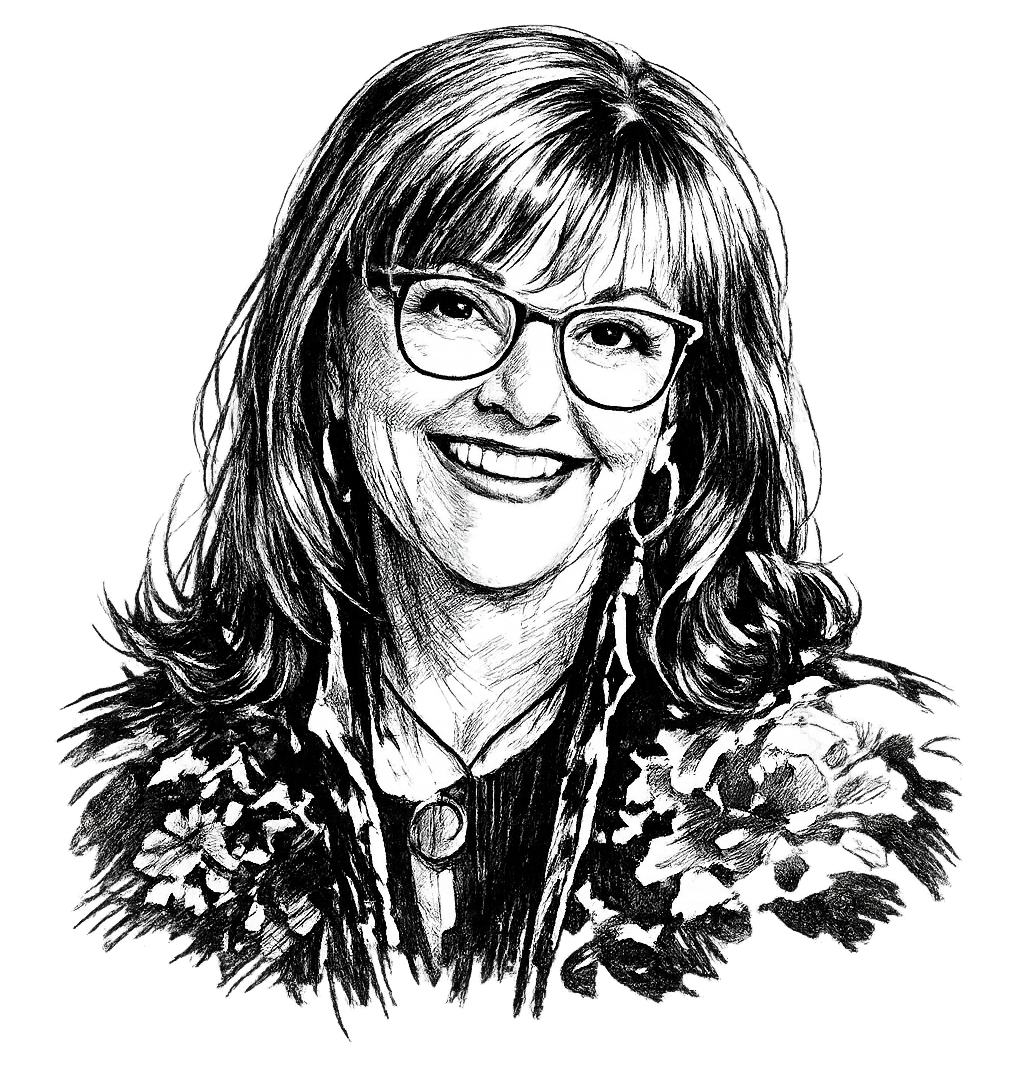 Patricia Martin
In the Digital Age, the Need to Remain Human Is Stronger Than Ever
Patricia Martin joins Jonathan Church to discuss her new book that brings Jung’s ideas about the self and the persona into the age of social media and AI. Although concerned about technology’s toll on personal identity, she argues that AI may yet have a liberating power.
Interviewed by Jonathan Church
David Krueger
Preventing Apocalypse or a Political Power Grab?
Absent a change of course on AI safety by governments worldwide, former Cambridge professor and leading AI-safety expert David Krueger believes that human extinction is “more likely than not.” He makes the case to our own Henri Mattila, a skeptic of both doomsday scenarios and political overreach.
Interviewed by Henri Mattila
A Message from a Lifelong Dog Lover: Pit Bulls Are Dangerous
Karen M. Prince, who grew up in a family that frequently rescued dogs, argues that compassion for unwanted animals should not blind us to the dangers posed by pit bulls, a breed responsible for far too many severe and fatal attacks, particularly against children.
Karen M. PrinceAging into Acceptance
Channeling Tolstoy’s 1886 novella, Robin Greene, who has now turned seventy-one, reflects on aging, mortality, and meaning.
Robin GreeneFarewell, Beanie
W. D. Ehrhart, a frequent contributor to this magazine’s poetry section, reflects on grief and loss following the death of Beanie, his family’s beloved cat of nearly twenty-two years.
W. D. Ehrhart“As I type this, I am sitting here crying again.”W. D. Ehrhart · “Farewell, Beanie”
The Many Lives of Thomas More
Scholars Andrew Hadfield and Joanne Paul examine the many competing interpretations of Thomas More, a historical figure of remarkable complexity and enduring interest, nearly five centuries after his death.
Andrew HadfieldThe Cambridge Five: Stalin’s Men at the Heart of Britain
Allen M. Hornblum, author of The Invisible Harry Gold, reviews Antonia Senior’s new book on the Cambridge Five, examining how a group of privileged Cambridge graduates came to betray their country—and why the British government was so slow to hold them accountable.
Allen M. HornblumPericles the Eccentric
Pericles is remembered as Athens’ great democratic statesman and orator. But as Cambridge University classicist Paul Cartledge argues, his private life—especially his relationship with Aspasia—also reveals him as one of antiquity’s most distinctive, even eccentric, figures.
Paul CartledgeThe Dead Hand of Austria-Hungary
Simon Maass traces the enduring influence of Austria-Hungary on modern intellectual life, arguing that the empire’s admirers have often drawn precisely the wrong lessons from its history.
Simon Maass
“Only in America”: Civic Memory at 250
Bruno Manno reflects on Fourth of July celebrations at his grandparents’ Italian tavern in Cleveland in the 1960s—and on the need for a renewed, reflective patriotism as America marks its 250th birthday. To combat growing disengagement among the citizenry, he proposes a new civic compact.
Bruno V. MannoConstitutional Distortion and America’s National Debt
As America’s debt nears $39 trillion, policymakers debate spending while ignoring a deeper question: Is much of modern federal spending constitutionally authorized? William J. Watkins, Jr. argues expansive readings of the General Welfare and Commerce Clauses helped create today’s crisis.
William J. Watkins, Jr.The Social Wealth Men Without College Degrees Need
Bruno V. Manno argues that men without college degrees need more than job training or credentials. They need “social wealth”: relationships, mentors, institutions, and pathways that help them build stable, connected lives rather than be left behind.
Bruno V. Manno
Arts
Fiction
Poetry
Not that the friendship’s like a fairy; but
the flutter feels like the return of light. James B. Nicola · “A Return”
The Arts section is edited by Austin Allen James.
More
Merion West · Established 2016
