
“Only in America”: Civic Memory at 250
Bruno Manno reflects on Fourth of July celebrations at his grandparents’ Italian tavern in Cleveland in the 1960s—and on the need for a renewed, reflective patriotism as America marks its 250th birthday. To combat growing disengagement among the citizenry, he proposes a new civic compact.
This Fourth of July brings back childhood memories. Every year, my extended immigrant family of more than two dozen relatives would gather to celebrate Independence Day at my grandparents' Italian tavern, the Golden Gate Inn, on the east side of Cleveland, Ohio. It sat in an Italian-American neighborhood called Collinwood. I have five vivid memories of those gatherings, from when I was very young to the mid-1960s, when I left for college.
The first thing I remember is that it was always hot and humid, with no air conditioning. Eventually, Dad would plug in a big square electric box fan in the kitchen to spew its version of cool air on anyone lucky to be close to it. Sooner or later, we kids gathered in the graveled backyard and sprayed each other with the green garden hose to cool off.
Second, food was everywhere. Most of it was cucina Americana: hot dogs, hamburgers, potato salad, coleslaw, butter pecan ice cream, and lemon meringue pie. Italian homemade favorites abounded, including meatballs and red sauce, sausage and peppers, and Dad's Italian wine, into which he sliced ripe peaches from the local farmer's market. Everyone, kids included, had peaches and red wine, the amount depending on age.
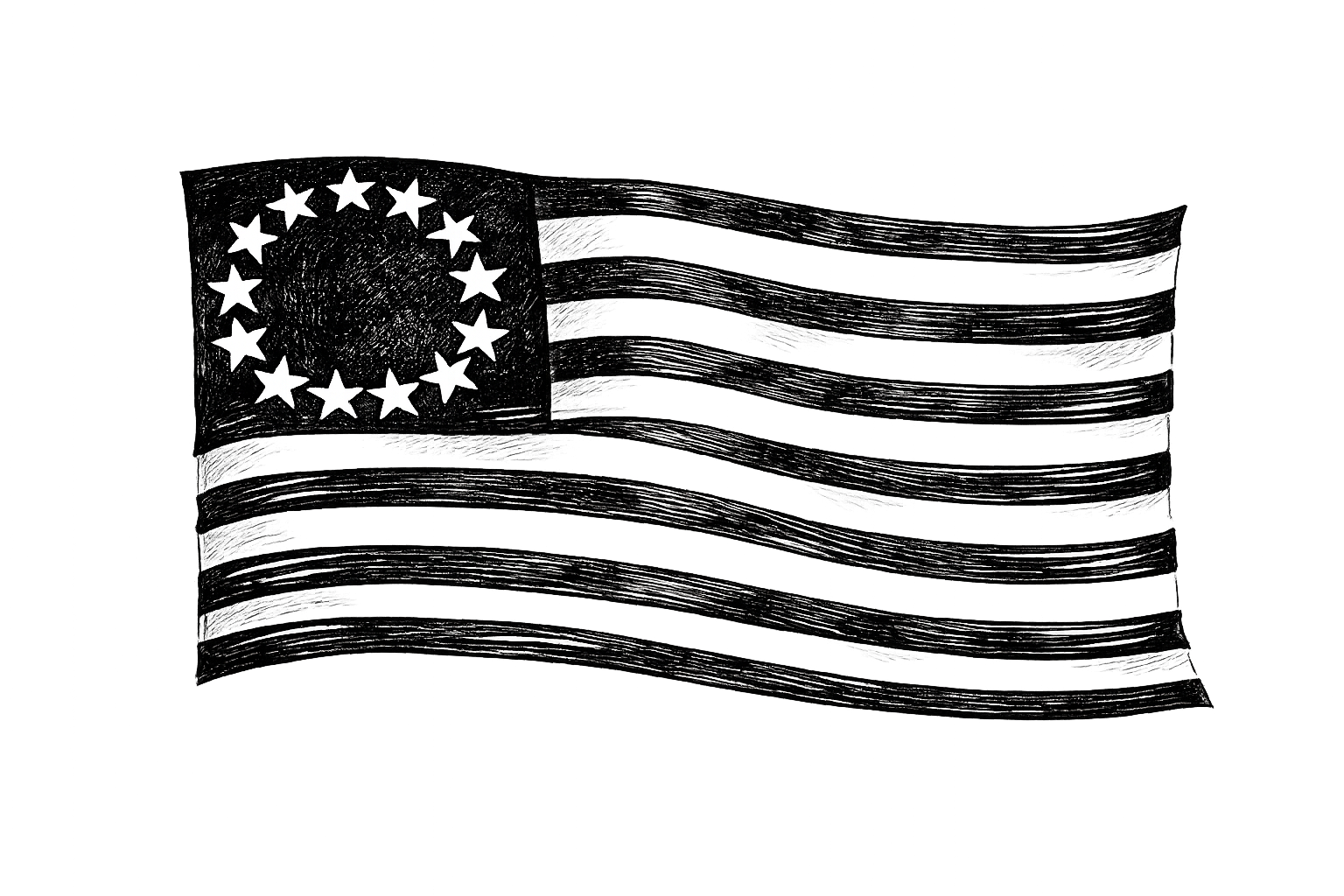
Third, there were always fireworks. The afternoon display of rockets, cherry bombs, firecrackers, and sparklers, all illegal, took place up the street by another Italian tavern called Mirabile's. In the evening, we saw the legal fireworks from the neighboring suburbs, visible from our driveway because no tall buildings blocked the view.
Fourth, we always watched one television show. It was the 1942 film Yankee Doodle Dandy, starring the irrepressible James Cagney, on the tavern's black-and-white Muntz television. Everyone waited for one Cagney number in particular, the "Yankee Doodle Dandy" song and dance about George M. Cohan, the "Man Who Owned Broadway," who was, the lyrics tell us, "born on the Fourth of July."
Fifth, adults always told stories, the same handful of themes cycling back in a kind of annual ritual. There were stories about the perilous boat journey from Italy to America and the train ride to Cleveland, where relatives helped with finding work. There were stories about the discrimination and prejudice they faced as immigrant Italians. And there were stories about military service in the world wars, and about marriage and family, with their joys and sorrows. At the end of each story, despite frustration, disappointment, and tragedy, came some version of hope and pride that their children were Americans.
"A country cannot ask young people to love what they have never been taught to understand."
Everyone at those gatherings loved America, believed they were blessed to be in America, and could never imagine living anywhere else. "Only in America" was a constant refrain.
The day’s events were a kind of civic education, though no one called it that. It was experiential, cultural, and familial. It blended what we now might call social wealth, or relationships, shared rituals, and common stories, with a deep sense of American identity. We did not debate what it meant to be American. We lived it.
Those childhood celebrations took place before the Bicentennial. This Independence Day, as the nation marks the 250th anniversary of the Declaration of Independence, those memories feel less merely nostalgic than instructive. The kind of shared civic experience I knew as a child is harder to find today.
There are troubling signs that Americans' knowledge of their history and civic institutions is declining, along with their sense of connection to the country. The Nation's Report Card shows that only about one in five eighth graders reaches proficiency in civics, with many lacking even a basic understanding of how government works. And while efforts are underway to improve civics education, knowledge alone is not enough. Civic education must connect facts to identity, institutions to responsibility, and history to belonging.
That is the animating idea behind the American Identity Project at the Progressive Policy Institute, led by my colleague Richard Kahlenberg. The project asks a deceptively simple question: What does it mean to be an American today? Kahlenberg argues that schools must help cultivate a Tocquevillean “reflective patriotism”: an attachment strong enough to support both pride and critique, grounded in shared civic values such as liberty, equality, individual rights, democratic self-government, and the rule of law.
We must create a middle ground between civics as rote memorization and civics as opinion without knowledge. Students need both "book learning and hands-on learning," a grounding in American history and institutions, and opportunities to practice citizenship.
The Declaration of Independence should not be taught as civic wallpaper or dismissed because of the Founders' failures. It should be taught as an argument. It began imperfectly, excluded many, and yet gave later generations a language for inclusion, equality, and self-government. Despite failures and struggles along the way, the Declaration, the Constitution, and the Bill of Rights helped keep the country rooted in its founding ideals.
If this year's Fourth of July is to be more than a milestone, we should build a new civic compact based on a handful of clear commitments:
Let us teach the full American story honestly. A sanitized story that hides America's failures is no more useful than a flattened one in which oppression is the only theme.
We must root civic education in shared principles. These include liberty, equality, constitutional government, religious freedom, free speech, and democratic participation. These are not partisan slogans, but the the inheritance of every American.
We have to connect civic knowledge to civic practice. Students need to experience citizenship rather than just study it. Debates, service learning, student government, mock trials, and community projects help young people see themselves as participants in a common civic life.
Let us rebuild shared civic rituals. Civic formation happens in families, neighborhoods, libraries, museums, houses of worship, and schools. It occurs wherever people gather to remember, argue, serve, celebrate, and belong.
It is imperative to make patriotism reflective rather than performative. The goal is not agreement but, instead, informed attachment. Unity does not require uniformity. A country cannot ask young people to love what they have never been taught to understand.
Lastly, we have to give teachers the support to teach hard things. Many civics teachers now worry about backlash when addressing controversial issues. A serious anniversary effort should make it easier, not harder, for teachers to help students wrestle honestly with liberty, equality, slavery, immigration, and democratic responsibility.
In retrospect, my childhood gatherings were about more than celebration. They were about integrating heritage and identity, past and present, family and nation. They were also about hope. My extended family saw the country not as perfect but as full of possibilities.
The question for the 250th anniversary is whether we can recover that belief, tempered by history, but still oriented toward the future. The ideals of 1776 are both a promise and a challenge, and the experiment they began remains unfinished.
"Only in America," my grandparents used to say. America at 250 needs more than nostalgia. We need citizens worthy of the promise.
Bruno V. Manno is a senior advisor at the Progressive Policy Institute and leads its Pathways to Opportunity What Works Lab. He is a former United States Assistant Secretary of Education for Policy.
