
From the archive
COLLECTION VII: Decennial

Special Ten-Year Collection
Decennial

2016–2026

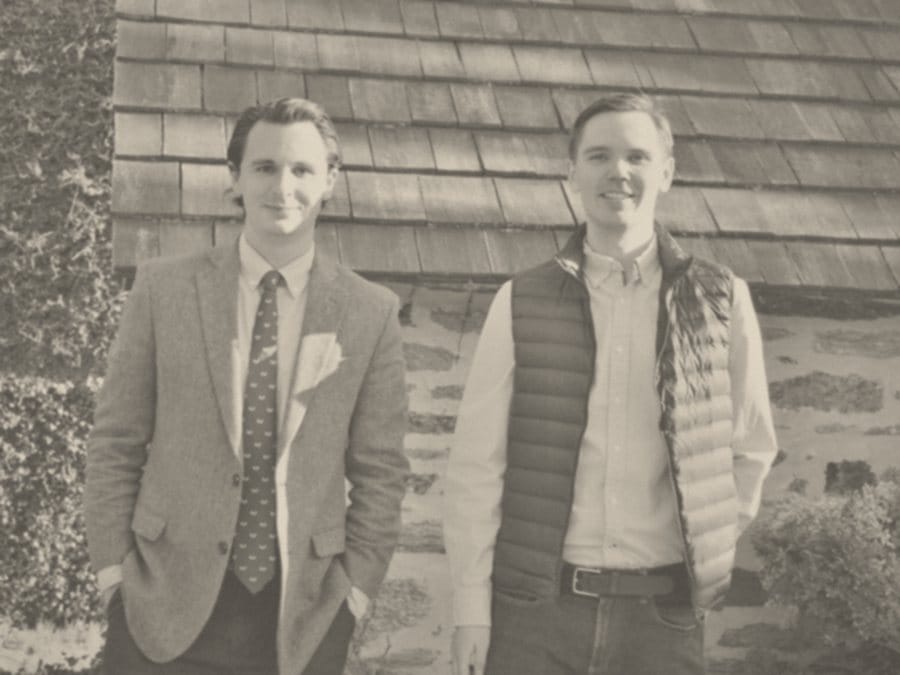
Letter from the Editor and Publisher
Dear Friends & Readers,
This special collection gathers articles and interviews from the earliest days of Merion West, beginning with Erich’s first article, through this year. We hand-selected them from nearly two thousand candidates. They are some of the very best we have published, and the process of choosing them brought back many memories.
Since the beginning, part of our ethos has been to publish writers willing to take reasoned, bold stances against prevailing opinion. Toward the end of the collection, In Hindsight sets some of the best of those articles beside the year each was published. They were unpopular when they ran; many have since proved to be more right than wrong.
This collection celebrates our progress, but just as importantly it honors the writers and friends who are the backbone of this magazine. We will continue the celebration next spring in the Philadelphia suburbs, and you can sign up here to indicate your interest. It will also be your chance to order The Best of Merion West: 2016–2026 in print form, which we will keep as reasonably priced as possible.
With great appreciation,
 Erich J. PrinceEditor-in-Chief

 Henri MattilaPublisher
America
“It is my conviction that we are going through the greatest technological and economic shift in human history, and our political class is completely asleep at the switch.”Andrew Yang, to Henri Mattila, 2018
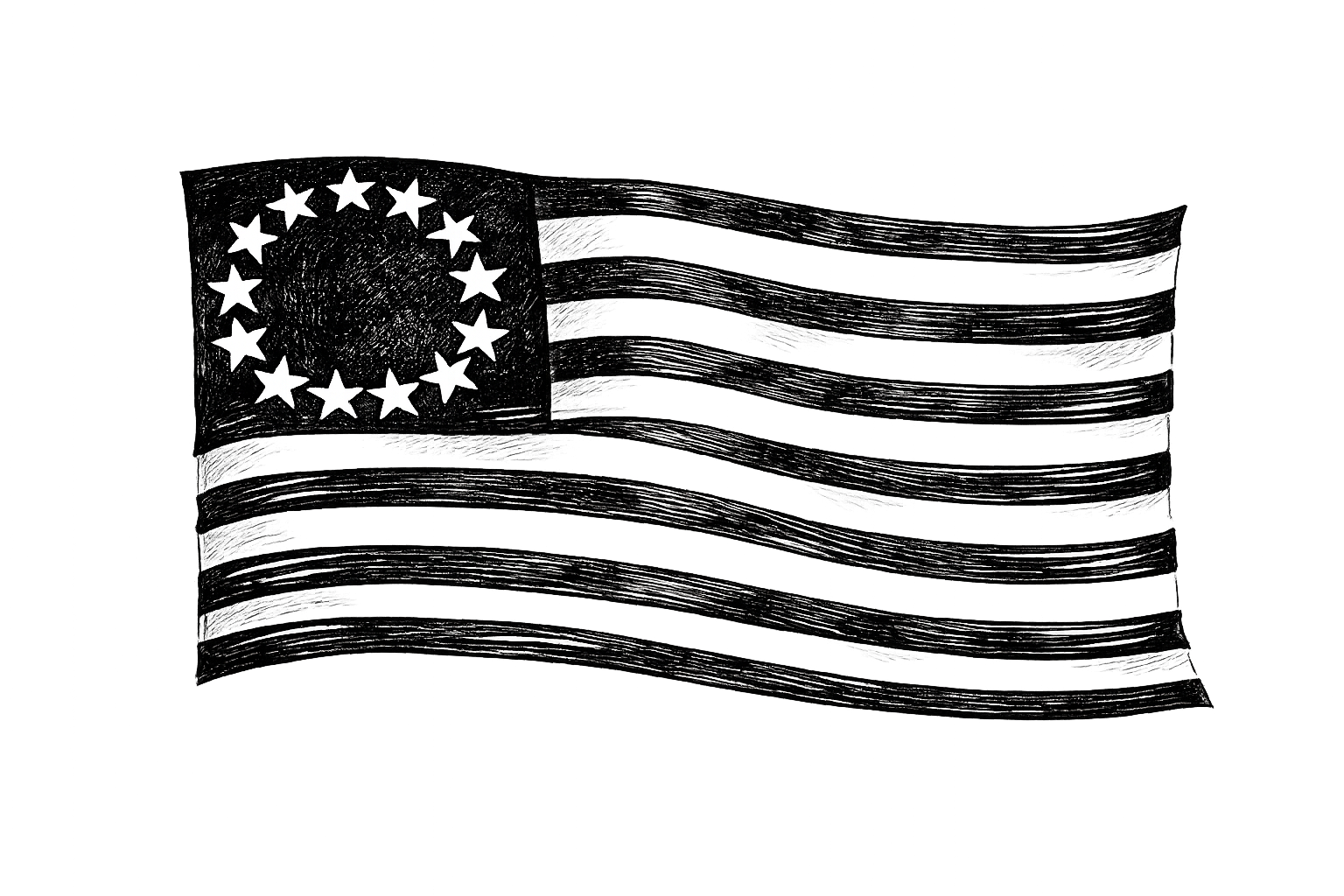
Where Are the Flags in U.S. Universities?
The first article we ever published: Erich J. Prince, back from a round of college visits, asks why American campuses fly the banners of foreign nations and every advocacy cause but so rarely their own country’s flag.
2026
Is There a Problem with Our Generic Drugs?
Our first long-form investigation, by Henri Mattila, into one of the overlooked corners of the healthcare system: whether the generic drugs that fill most American prescriptions might be priced too low to be safe.
Essays
2020Why America?
A personal essay by Alexander Zubatov on his family’s journey from the Soviet Union to New York in the 1970s, and on what the immigrant sees in America that the native-born person often forgets.
2025Year of the Plague: Jake Gardner and the Ghosts of 2020
A memoir essay by Matthew Chabin, who returns to a night in Omaha that rattled the nation to show another side of an old friend at its center.
2024These People All Know Each Other
A column by Erich J. Prince on the small world of American commentary, where the same writers, editors, and podcasters turn up at the same parties, and on Charles Krauthammer’s habit of staying home.
Interviews
2018Interview with Andrew Yang, 2020 Presidential Candidate
Henri Mattila’s interview with Andrew Yang, then a long-shot candidate, on the economic shift he believed Washington was sleeping through.
2019Vice President Mondale Comments on Today’s Democratic Party
Erich J. Prince’s interview with Walter Mondale, who, at ninety-one, had advice for his party: The public wants someone who gets things done.
2025Senator Lankford’s Timely Reminder of the American Ethos
Erich J. Prince’s interview with Senator James Lankford on individual agency, lessons from the Capitol, and President Trump's first hundred days.
Abroad
“Dear doves and hawks and other feathered brethren: It is already over.”Vahaken Mouradian, on Afghanistan, 2021
The French Election and Europe’s Post-Historical Collapse
An essay by the philosopher Benedict Beckeld, whose first year living in France awoke his politics, on the 2024 French election as a symptom of a continent turning against its own inheritance.
2017Scandinavia’s War on Babies with Down Syndrome
An essay by Tyler Olson on what prenatal screening has come to mean in the Nordic countries, where, in Iceland, close to one hundred percent of babies diagnosed with Down syndrome are aborted.
2021Withdrawal Symptoms
Vahaken Mouradian’s commentary on the American withdrawal from Afghanistan, addressed to hawks and doves alike.
2022Long Live the Queen: 1926–2022
An elegy by the Englishman Henry George, written in the days after Elizabeth II’s death, on how a crown can unify a nation and anchor it morally.
2018 InterviewThe Man Who Photographed Tiananmen Square
Erich J. Prince’s interview with Jeff Widener, the photojournalist behind the “Tank Man” image, on why he keeps walking toward danger.
Faith, Art & Letters
“The destruction of Notre Dame has shaken our complacent belief in the permanence of things and the ability for our culture to last without care and cultivation.”Henry George, 2019
 2025
2025
Why We Should Reacquaint Ourselves with William Blake
Mark Vernon, the author of a recent book on Blake, makes the case for returning to the poet, painter and visionary, and to the wisdom in his words and his pictures alike.
Agnosticism Is Not Reasonable
An essay by Stuart Doyle arguing that agnosticism, so often presented as the humble middle path between belief and atheism, is neither coherent nor practical: Refusing to choose is a choice of its own.
2025 InterviewWhy Charles Murray Is Taking Religion Seriously
Erich J. Prince’s interview with Charles Murray on his new book, and the slow, unexpected road from reluctant Quaker meetings to defending the truth of many religious claims.
2019What Notre Dame Says about Civilization
Henry George, writing two days after the fire, on what the burning cathedral revealed about the permanence we seem to take for granted.
2022Salman Rushdie: The Antithesis to Moral Cowardice
Gerfried Ambrosch, days after the attack on the novelist, reflects on refusing to be frightened into silence.
2023Beyond Profit: The Value of the Humanities
An essay by James M. Magrini on the civic purpose of the humanities, and on the nation of employees, not citizens, that schools produce without them.
2024Irregular Beats: The Surprising Politics of Kerouac, Burroughs, and Ginsberg
Robert Dean Lurie on the unlikely politics of the Beat writers, and a Kerouac who might have founded a counterculture to the counterculture.
2024On the Music of John Prine
Erich J. Prince reflects on the songwriter John Prine, and on the one song, “Fish and Whistle,” that he finds the most philosophical of all.
The Human Person
“…she would also have looked around her and seen the stern and damaged but also joyous legacy she would leave behind.”Bruce Overby, on his mother, 2024
A Prison Love Story
A first-person essay by Antoine E. Davis, written from prison, where he proposed to Britteni over the prison video system: an unconventional love story, but a love story just the same.
2024Winds of the Great Shame
A memoir by Bruce Overby of his mother’s last days, in the small house where she raised nine children.
2026Please Stop the Profanity
A plea by the education professor Karen M. Prince for holding our tongues, especially in front of children.
2023 InterviewDr. Cheryl Green: What’s Ailing Young Women
Emeline Torrens’s interview with the psychiatrist Cheryl L. Green, author of Heal Your Daughter, on what she is seeing in the adolescent girls she treats.
2020 InterviewLeaving Washington, D.C. Behind—and a More Wholesome Life
Kevin Turner’s interview with Britt Fisk, a former Bush White House staffer who left Washington to raise cattle and seven children in northern New Mexico.
2018 InterviewPulitzer Prize-Winning Photographer of the Seton Hall Dorm Fire
Erich J. Prince’s interview with Matt Rainey, whose prize-winning photographs followed two students’ recovery, on recording suffering without exploiting it.
In Hindsight
Certain Merion West contributors have taken stances that, in retrospect, proved prophetic. Here are a few such examples.
2019
September 16Standing Up for Dave ChappelleMatthew Pinna October 16Robin DiAngelo’s White Fragility Theory Falls Prey to Logical FallaciesJonathan Church2020
March 24Balance Is Needed in the Fight Against the CoronavirusJoshua Leichtberg, M.D. June 2As the Word “Racism” Loses Its MeaningJonathan Church July 2When Censorship Is Outsourced to the Private SectorEddie Ferrara August 3Why Cancel Culture Won’t LastMatt JohnsonThe ten-year book
The Best of Merion West: 2016–2026
A small, finely made collection of selected articles, fiction and poetry from the first ten years of Merion West.
All proceeds go toward publishing more original writing.
Signed in as .
You’re on the list. We’ll write about the book and the celebration.
That didn’t go through. Please try again.
Save the date
Ten years, in person
An evening in the Philadelphia suburbs
Spring 2027
Details to come. Everyone on the list hears first.
