
From the archive
Why Progressives Should Not Pin Their Hopes on Impeachment

“So while I think it is important that the impeachment trial proceed, it is far more key for progressives to vest in political and social movements that target the underlying problems.”
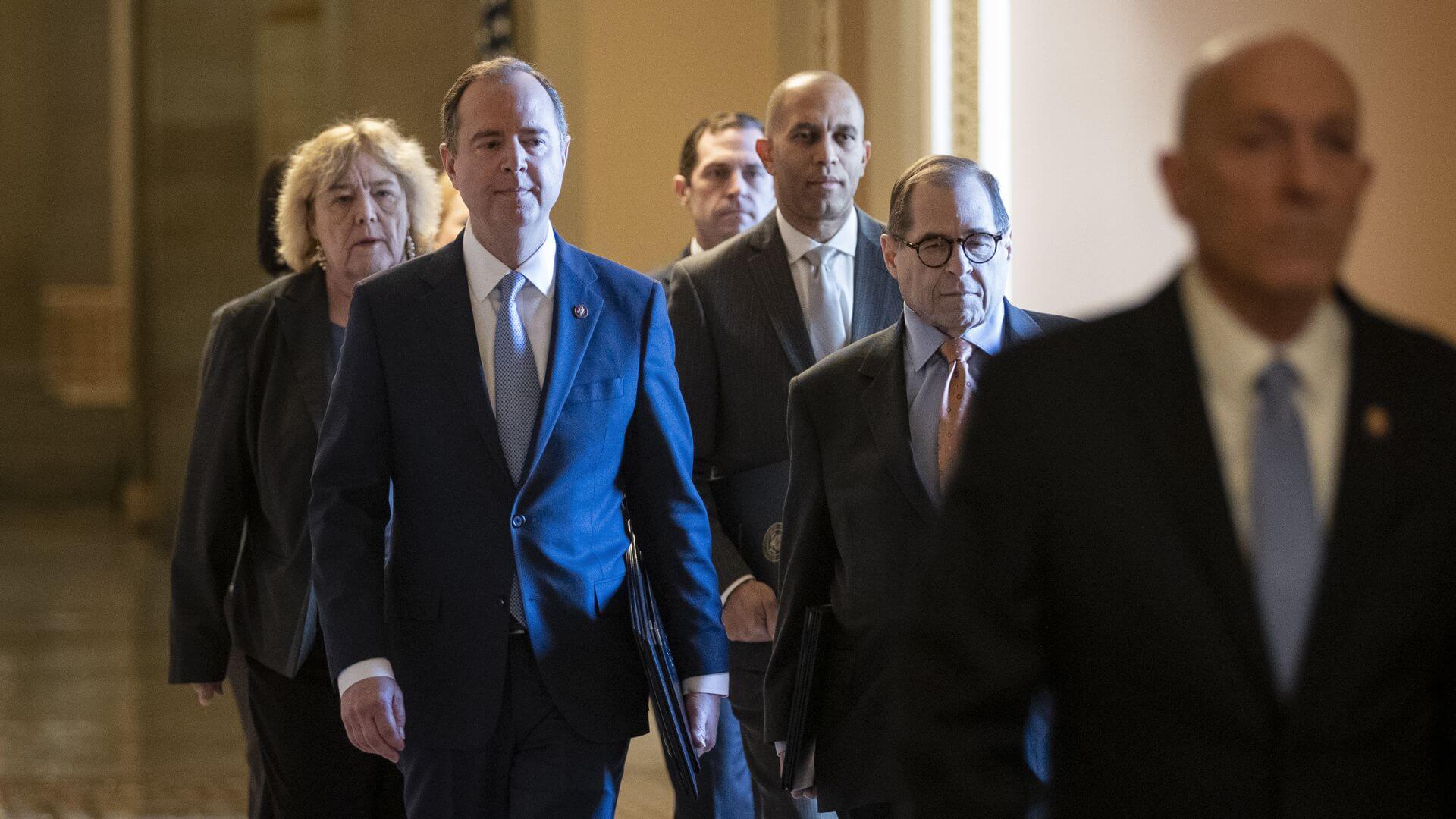
“So while I think it is important that the impeachment trial proceed, it is far more key for progressives to vest in political and social movements that target the underlying problems.”
Introduction
President Donald Trump has the auspicious honor of being only the third American President to be impeached and face trial in the Senate. While it remains highly unlikely that the Republican-controlled upper chamber will vote to remove the president, this will undoubtedly mar his legacy—a fact he seems petulantly aware of. And indeed it should, given that Trump apparently subordinated American foreign policy to his own political ambitions while putting an entire country at risk in its conflict with a powerful Russian despot. Such monumental vanity and selfishness are embedded in Trump’s worldview, which seems immunized from an appreciation for the real consequences of his actions. As the paradigmatic post-modern conservative, Trump’s “truthful hyperbole” and outright lies have contributed to the increasingly blurred distinction between his own interests and those of the American people, as well as the difference between truth and falsity—and a respect for the past as opposed to reactionary nostalgia. The United States and the world will be a more just place once Trump’s politics of resentment and fear join the ash heap of history. This trial will provide further evidence of this, if any were needed.
Beyond just pushing against the banal vindictiveness of Trumpism, impeachment serves a more important function in chiding the expanse of executive power and aloofness, which has come to characterize American politics in the past few decades. Beyond his status as a product of neoliberal society’s post-modern culture, Trump is symptomatic of a drift in power away from Congress and towards the executive branch of government, which has been going on for decades—perhaps even a century. While the Watergate scandal put a temporary hold on the expansion of the “Imperial Presidency,” the trend has since picked up again and has defined the tenure of both Republican and Democratic administrations. Impeachment can serve to curb this expansion by reasserting the power of the representative branch of government over the presidency, while also exposing the consequences of letting the head of the executive think he can do whatever he wants. This should not be an especially partisan issue; Republicans found President Barack Obama’s liberal use of executive power infuriating, much as Democrats now disdain Trumpian proclamations that the Constitution means whatever Trump wants it to mean at any given minute. Hamilton expressed the point nicely in Federalist No 69, when he hammered home why an impeachable president was one of the features that distinguished the American executive branch from a monarchy, such as Great Britain’s:
“The President of the United States would be liable to be impeached, tried, and, upon conviction of treason, bribery, or other high crimes or misdemeanors, removed from office; and would afterwards be liable to prosecution and punishment in the ordinary course of law. The person of the king of Great Britain is sacred and inviolable; there is no constitutional tribunal to which he is amenable; no punishment to which he can be subjected without involving the crisis of a national revolution. In this delicate and important circumstance of personal responsibility, the President of Confederated America would stand upon no better ground than a governor of New York, and upon worse ground than the governors of Maryland and Delaware.”
The rest is for members.
All proceeds go toward publishing more writers and poets.
Free for 30 days, then $3 a month
Become a member
This work is preserved in Merion West’s archive of articles and poems published from 2016 through early 2025. Explore the archive