
From the archive
The Dangers of Yale Renaming Its History
People of Irish heritage might insist that the Seychelles rename its capital, Victoria, because its namesake queen reigned over the United Kingdom of Great Britain and Ireland during the Irish famine, which resulted in the deaths of an estimated 1 million people and was caused, in large part, by British grain import practices.
History, by definition, is not just a reflection of what we happen to believe at the present. Rather, it tells the story of how our views and values have evolved, often for the better.
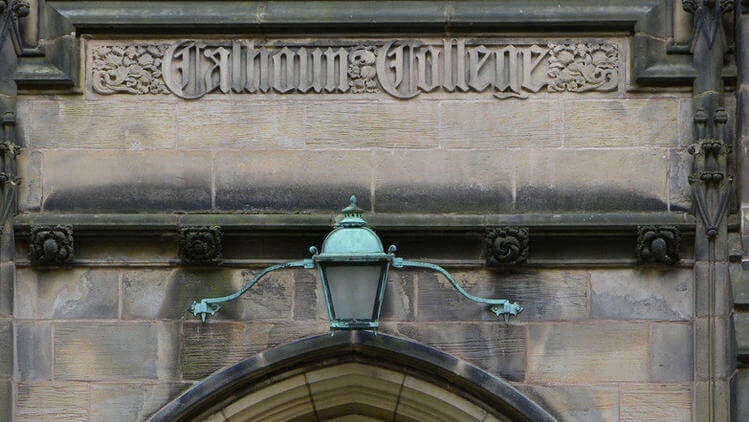
This past weekend, the Yale Corporation renamed one of its residential colleges for computer scientist Grace Hopper, dropping the name of John C. Calhoun, whose political philosophy included a defense of slavery. The decision came after months of campus protest over honoring Calhoun, whose beliefs many find abhorrent. Tampering with the historic record, however, has its dangerous side.
Similar demands for renaming buildings honoring historical figures have been made at other institutions including Princeton University, where students took issue with the use of President Woodrow Wilson’s name because he did not share modern sentiments on race and supported certain segregationist practices.
History is no doubt filled with unpleasant happenings. To demand, however, that events we find distasteful be removed from our consciousness is not only counterproductive but invites the normalization of whitewashing and selectively engaging with history.
Prior to Yale’s announcement, the policy of the university recognized the importance of facing history rather than sweeping it under the carpet when it is difficult to bear. To this effect, university President Peter Salovey said, “Through teaching and learning about the most troubling aspects of our past, our community will be better prepared to challenge their legacies.”
The rest is for members.
All proceeds go toward publishing more writers and poets.
Free for 30 days, then $3 a month
Become a member
This work is preserved in Merion West’s archive of articles and poems published from 2016 through early 2025. Explore the archive