
From the archive
Ken Buck on the Rise of Socialism and the Failures of Congress
"We used to be inching towards socialism, and now we are moving fairly rapidly toward socialism," former Congressman Ken Buck states in a wide-ranging conversation about government spending, corporate regulation, DOGE, and his surprising decision to endorse a Democrat for governor of Colorado.
Ken Buck, who was first elected to the United States House of Representatives in 2014, suddenly announced midway through the previous session of Congress that he would resign his seat. Buck, who also formerly chaired the Colorado Republican Party from 2019 to 2021, explained the reasoning for his resignation: "Everywhere I go in Colorado I hear that people are not happy with Trump and are not happy with Biden...We have to have better candidates up and down the ballot, not just President, but Senate, House, local offices. We've got to find better ways to elect candidates and bring America together."
He further cited how "dysfunctional" the House of Representatives has become in recent years, characterized by bickering rather than building consensus on substantive issues.
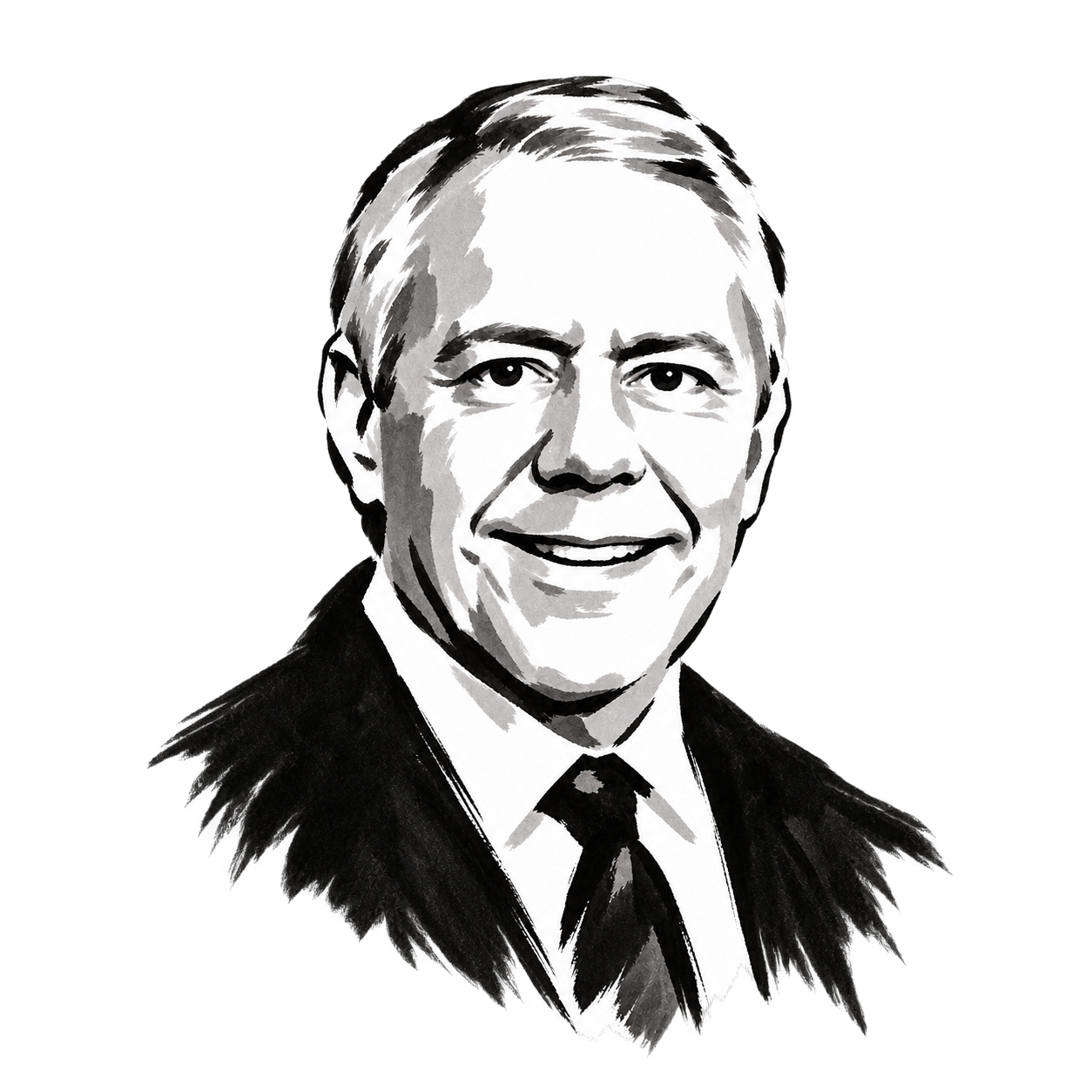
Since leaving Congress, Buck published his fourth book Wake Up America!: The Rise of Socialism Is the Death of Freedom, which is the subject of this interview, and taught a seminar at the University of Chicago. Earlier this month, Buck made headlines in Colorado for his decision to endorse the state's Democratic Attorney General, Phil Weiser, over Republican nominee Victor Marx in the upcoming gubernatorial election.
In the following conversation with Merion West editor-in-chief Erich J. Prince, the former Congressman criticizes the growing popularity of socialism among American voters, particularly among younger voters, the reality that it is often big business itself lobbying for further regulation, and the fact that fiscal irresponsibility, despite sloganeering, is very much the domain of both political parties. Buck also elaborates on his decision to endorse Weiser.
To start off, early in the book, you cite a 2025 polling result suggesting that more than half of Americans said they had "a favorable view" of socialism. In other interviews you’ve talked about the role the education system has played. Other commentators talk often about people who came of age amid the Great Recession. Why do you think so many people in this country view socialism so favorably now in 2026?
I think it’s a combination of factors. One is, as you said, many people came of age after the fall of the Soviet Union, Eastern Bloc countries, and don’t really remember or have lived through the change in Cuba under Castro. Most people actually have been alive during the Venezuela downfall, from the wealthiest country in South America to one of the poorest countries in South America as a result of socialism. But they don’t see a trend line; they just see an isolated incident.
And so I think that, one, it is the age of the people being polled. The older you are, the more skeptical you are of socialism. Two, I think our education system does a really poor job of explaining capitalism, of explaining the prosperity that’s been created through capitalism and free markets. I think that there is a tendency to talk in glowing terms about socialism, and so I think part of it is our education system.
And then I think there’s a frustration. People see the uber-wealthy in this country, and they don’t think the system is fair. I would argue that the uber-wealthy are creating uber-jobs for the rest of us. Whether they have a lot of money doesn’t really matter to me. What matters to me is whether I am able to buy food, housing, and the rest of it. So I think there has been a shift for a lot of different reasons.
I think about the 2025 victory of Zohran Mamdani in New York. I look at the polling lead currently being enjoyed by Abdul El-Sayed. I wonder how much of this push for socialism is a reaction to (or response to) the Trump administration, and how much is it a result of careful engagement with the actual policy specifics proposed by them?
It’s a great question. I think we saw the popularity of socialism increasing for the last ten, twelve years. When President Obama in, I think probably 2008, said that he was running for president because he believed in redistribution of wealth. Joe the Plumber became the other side of that—that redistribution of wealth is socialism. The progressive wing of the Democrat Party has been advocating for socialism for a while.
In addition, Bernie Sanders was certainly elected [to the Senate] and running for president. I think his first run for president was ’16. But we have seen the less popular levels of socialism in this country for a while. Has socialism become more popular because of the ICE enforcement in the country, because of President Trump’s perceived harsh policies in other areas? Maybe. But the seeds have certainly been planted for a long time.
You served in the House alongside people who had these beliefs. What were conversations like, insofar as they took place, between members of the House Freedom Caucus and people who held such different viewpoints?
I think, for the most part, AOC and the Squad were sort of minimized by most Democrats and certainly Republicans in the House when I was there. I think since that time, in the last three, four years, they have been more popular and accepted. Now, AOC proposed the Green New Deal, and people just laughed at it: "That’s ridiculous." Then the Biden administration enacted much of that in their Inflation Reduction Act, Build Back Better legislation. So as absurd as it seemed to people when AOC announced it, it became part of the Democrat mainstream policies later on.
I don’t know how much the Progressive Caucus has grown on the Democrat side in the House, but I suspect it has grown, especially with primary election victories in the last six months. And so what was once fringe is now mainstream on the Democrat side in the U.S. House.
I found many things interesting in your book, but one of them is that you drew attention to this misconception that there’s often a tug-of-war, so to speak, between business and government. You write that "the executives at the biggest corporations often welcome new regulation." Can you talk about when you came to that realization and some of the implications of this reality you’ve described?
It was sort of known to me, but the extent of it wasn’t known to me at the time that I entered Congress in 2015. What really was a knockout blow to me was the work that I did in the antitrust area concerning Big Tech. And it became clear to me that Big Tech had lobbied Congress for the rules and regulations that were regulating them.
More recently, we have seen these AI companies start to talk about, "Oh, we need government regulation. This could get out of hand if we don’t have government regulation." It seems counterintuitive to people: Why the heck would the big companies want more regulation? Well, they want more regulation because they are able to suppress competition in the marketplace. They’re able to use that big regulation as a barrier to entry in whatever area they’re in.
The example I use in the book is Dodd-Frank. The cause of the financial crisis was not small community banks. It was the big banks. All of a sudden, we had this legislation, and it was referred to as "too big to fail": the banks that are too big to fail, we need to regulate them. The result of all the regulations was that the banks that were too big to fail hired more compliance officers, and they largely wrote the Dodd-Frank bill. They hired more compliance officers, and they were fine.
It was the community banks that didn’t cause the financial crisis that went out of business. In the book I talk about a third or half of the community banks of America have either been gobbled up by the big banks or just gone out of business completely.
Community banks are a recurring feature of your book.
Yes, and really it is a function of socialism. The concentration of power is one of the aspects of socialism. It’s much easier for people in politics to deal with five banks than it is to deal with 10,000 banks. And so the control of the economy—for those who want to control the economy as opposed to allowing the marketplace to influence the economy—it is much easier to deal with consolidated industries than it is to deal with dispersed industries.
I think of Michael Oakeshott and the idea of one of the essential conservative truths being a skepticism of concentration of power, whether in government or in big business.
Exactly, and that’s what we’re seeing now, frankly, in this country, and it’s dangerous.
So Congressman, you’ve written books both in and out of office. Do you think you are, in some ways, a more effective articulator of the views that you hold now outside of Congress than back when you were in office?
I don’t know. I think that I have had a unique perspective as a Reagan conservative on how government works and how the legislative process works. Being in the House has given me that ability to say, for example, in the first book I wrote, I talked about how you have to buy a seat on a committee. You don’t just get a seat because of your background or because of your interest in a particular subject matter. You actually have to pay the party that you’re in to be able to get committee assignments, and that all comes from being inside Congress.
I think on the outside, as I have interacted more with small businesspeople—and you go to a town hall meeting, and a lot of people are too busy working to show up to town hall meetings to tell you what’s on their mind. Now I’m in the vegetable section, and it’s a virtual town hall meeting because people come up to me all the time and talk to me about issues that they feel strongly about. I think both perspectives are helpful in terms of trying to articulate conservative principles.
In my view, perhaps the most noteworthy aspect of your book was at a time when the reflexive position is that DOGE was a failure, you take sharply the opposite view. Can you explain why you think DOGE was a good start?
Yes. Why it wasn’t started thirty years ago, I have no idea. We have inspectors general in the executive branch, and they have largely been neutered. We have the General Accounting Office. We have all sorts of agencies and efforts that have been ignored over the years, and DOGE really shone a light on the amount of fraud and the amount of waste that goes on in government.
Now, it was used by the Trump administration to pass the Big Beautiful Bill, which was wasteful. In fact, Elon Musk said—I forget what he called it—the "big, beautiful, wasteful bill" or something.
That bill featured prominently in Musk’s disagreements with the president.
Right. And so, when the President called me to support the tax cuts in 2017, I said to him, "Absolutely, Mr. President, I support tax cuts, but we’ve got to make sure that we have spending cuts." "Congressman, we are going to have spending cuts. We’re working very hard on that."
And I think he realized that it’s going to be very hard to pass tax cuts 2.0 in 2026 if he doesn’t have a narrative about reducing federal spending. So DOGE served his purpose for that. After the Big Beautiful Bill passed, it sort of disappeared. But my argument in the book is that we need to bring it back, and we need to bring it back in full force if we’re going to reduce the government spending for purposes of reducing our annual deficit and the national debt. But, more importantly, for purposes of combating socialism, because socialists use big government spending as a way to manipulate the economy.
As you point out in the book, it seems as though—and history tends to make this clear—both parties are fairly addicted to spending. I think one way you put it is that when there’s this call to do something on the part of a legislature, that usually takes the form of, "Let’s spend more."
Absolutely. An example of that—and I talk about it in the book, but it is just such a clear example. In 2021, President Biden just started in office as president. He’s been in office since dinosaurs roamed the Earth, but he was president in 2021, and we had a Democrat House and Democrat Senate. They passed an—and these are key words—temporary COVID healthcare subsidy. And the temporary COVID healthcare subsidy was set to sunset in 2022.
In 2022, the Democrats passed an extension, but every Democrat voted to sunset that extension in 2025. Now, the Republicans are in control of the House, the Senate, and the White House, and 2025 comes along, and those subsidies will go away. And now the Democrats are saying Republicans are heartless for doing what we put into law: sunsetting this temporary COVID program. COVID is no longer around; "temporary" expired years ago. And Republicans say, "Well, we don’t want to face this issue in an election, so we will vote," some of them, not all of them. But some of them voted to extend that program. President Trump gladly signed it, and we are going to have the temporary subsidy forever until it bankrupts us, frankly.
There’s that truism about nothing’s more permanent than a temporary government program.
Right. And, in fact, President Reagan said that the closest thing to eternal life on Earth is a federal government program. Again, the incentive in Congress is to get reelected. It’s not to balance the budget. It’s not to address fiscal issues responsibly. And so if we could just keep spending more and get reelected, members of Congress think that’s a great idea.
I remember being very struck in 2019 when George Will wrote that, for all the people fearing America becoming a socialist country, two-thirds of the federal budget already consists of transfer payments. What do you say to someone who says we’re already a socialist country?
Well, I don’t disagree with them. You started to see that in the era when communism was rising in Europe and in Asia. And so the FDRs of the world instituted programs like Social Security. It’s a socialist program. I’m not saying we should do away with it. I’m not saying that all government programs are bad. Especially for a prosperous country like the United States, having a safety net makes sense.
But let’s not fool ourselves. We used to be inching towards socialism, and now we are moving fairly rapidly toward socialism. We either need to stop and reverse the trend, or we will be a full-fledged socialist country in the not-too-distant future.
Last question, sir: You made a number of headlines in recent days for your decision to endorse Colorado Attorney General Phil Weiser for governor. It’s always notable when a former member of the House Freedom Caucus is endorsing someone from the other party for governor. Can you talk a little bit about that decision?
Yeah—I worked with Phil on a lot of the Big Tech issues. He led the fight against Meta. Meta settled that case and really conceded their bad conduct and implemented programs to counter that. I have seen Phil working in rural America, listening hard to the oil and gas industry, listening hard to the agricultural industry in Colorado, and I think he is very well qualified.
The Republican running against him has never held office, has never dealt with the legislature, has never put a government together to run the state. I just felt that the qualifications were so disparate that it was time to send a message to the Republican Party in Colorado. This idea that we have a litmus test and it doesn’t matter how qualified you are has to go away. We’ve got to compete with qualified people against qualified people.