
From the archive
Review: “The Enigma of Clarence Thomas” by Corey Robin

“Despite this, Thomas has also long acknowledged the history of racial discrimination in the United States and has never accepted the popular conservative trope that the impact of racism is merely a historical issue in the present day.“
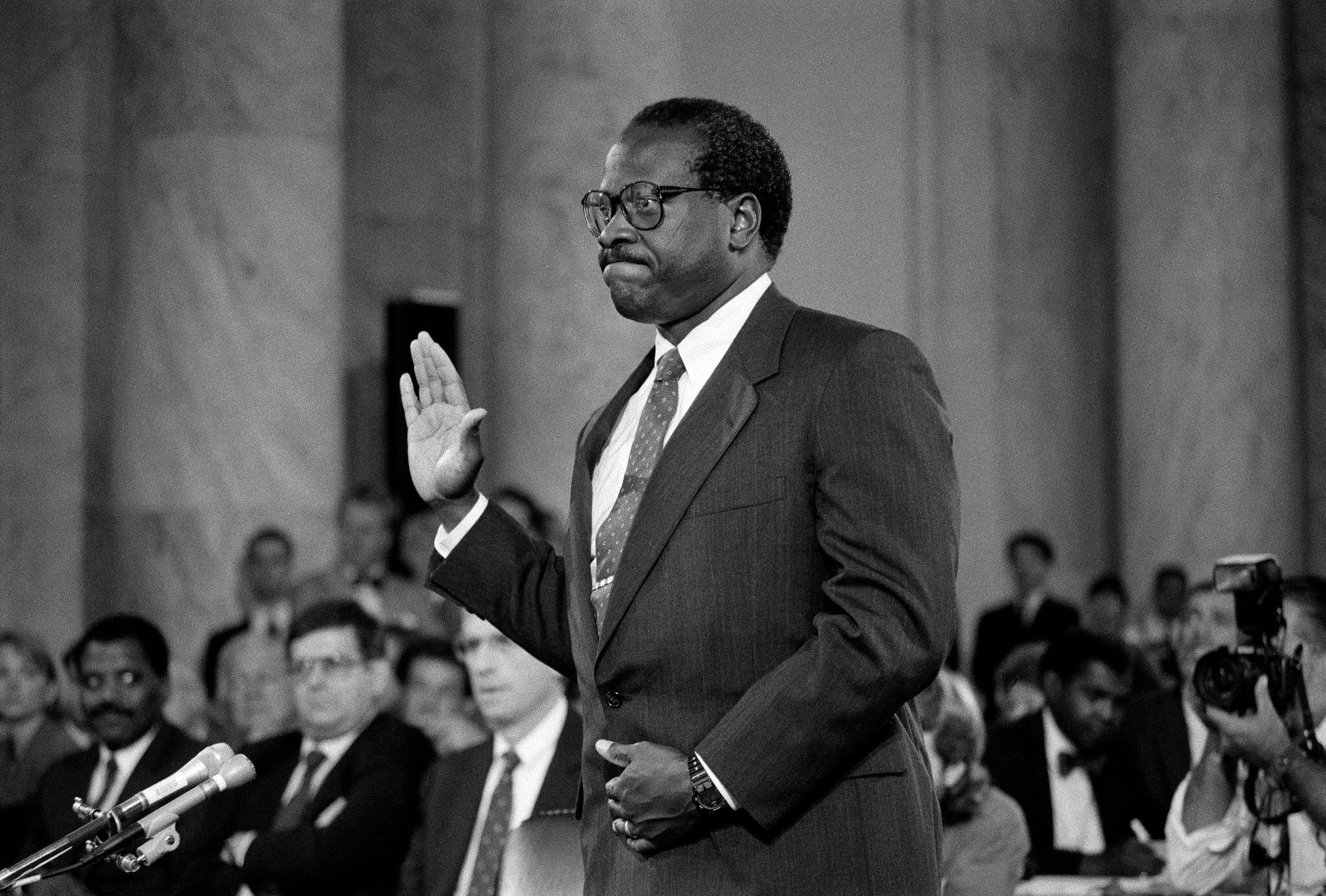
“Despite this, Thomas has also long acknowledged the history of racial discrimination in the United States and has never accepted the popular conservative trope that the impact of racism is merely a historical issue in the present day.“
Introduction
With the publication of The Reactionary Mind in 2011, Corey Robin made a name for himself as one of the most incisive progressive critics of conservatism. His scholarship was of a rare breed: both rigorous and thought provoking, but also addictively readable. It is very unusual for one to go through an academic book, almost helplessly turning the pages just to enjoy the sparkling prose and refreshing lack of pretension. Oddly enough, the thinker he most resembles is not anyone in the leftist canon but Isaiah Berlin, whose approach to examining a thinker’s work went well beyond hermeneutic analysis of text. Like Berlin, Robin enjoys getting under the skin of his subject matter by trying to understand the personality of the individual behind the work. When it succeeds, the results consist of uncommon insights into the subject matter.
Robin’s new book The Enigma of Clarence Thomas continues his analysis of major figures on the political right by examining one of the more unusual judges in American history. Clarence Thomas was the second African American to serve on the Supreme Court and is currently the longest serving justice. He was appointed to the bench in 1991 after a firestorm of controversy, when his former subordinate Anita Hill accused Thomas of sexual harassment, nearly putting a wrench in his nomination. Thomas is also among the most conservative justices on the court. During his tenure, Thomas has written against the legalization of same-sex marriage, has approved of extensive executive powers for the Bush administration during the War on Terror, and has favored the police and carceral authorities over defendants and criminals in cases concerning the rights of the latter. Despite this, Thomas has also long acknowledged the history of racial discrimination in the United States and has never accepted the popular conservative trope that the impact of racism is merely a historical issue in the present day. These myriad complexities make Thomas an unusual figure, which explains Robin’s decision to devote an entire book to him.
The Roots of Thomas’ Jurisprudence
Robin’s book is divided into three large sections, which analyze Thomas’ perspectives on race, capitalism, and the constitution. However, his analysis does not just focus on the Justice’s intellectual and legal opinions. Robin devotes a significant amount of time to biography, looking at Thomas’ personal history, having grown up in the Jim Crow South and coming of age during the Civil Rights movement. Thomas was largely abandoned by his parents and was ultimately raised by his grandparents, who operated a successful fuel oil business. His grandfather was a tough but generous man who Robin believes remained the primary inspiration for Thomas’ outlook, ultimately instilling in him the belief that if an uneducated African American could make it in the Jim Crow South, there were few excuses for anyone else. Robin generously notes the replete references to his grandfather throughout Thomas’ life and interprets them charitably but also observes that Thomas has little to say about the women who also helped raise him. This is because unlike his grandfather, Myers Anderson, there was little flashy or dramatic in their quiet efforts, which instilled Thomas with an ongoing antipathy to women’s issues. Robin also takes issue with Thomas’ unwillingness to acknowledge the significant leg up his grandfather’s comparative wealth gave him in an effort to paint himself as a purely self-made man who overcame the odds. This is an ongoing theme in Robin’s interpretation of Thomas, who comes across as a highly disadvantaged man that nevertheless refuses to acknowledge any help he received during his life, unless it came purely from the teachings of Myers Anderson. This is because such acknowledgements would problematize the dark and insular philosophy Robin associates with Thomas: that African American men like himself cannot expect help from anyone and so they need to toughen up and make something of themselves without succumbing to a victim mentality. The irony is that Thomas’ experience as a racialized victim in a largely white world—from Yale Law School to his tenure as a Supreme Court justice—might have aroused in him a greater sense of compassion and orientation towards social justice. Instead, Thomas comes across as a man driven by resentment, whose hagiographic self-understanding comes at the expense of deep feeling for others. For Thomas, the world is a tough place—and those who are victims better learn to make the best of it without looking for handouts of assistance from anyone, especially from the white ruling class.
The rest is for members.
All proceeds go toward publishing more writers and poets.
Free for 30 days, then $3 a month
Become a member
This work is preserved in Merion West’s archive of articles and poems published from 2016 through early 2025. Explore the archive