
From the archive
Review: Roger Scruton’s “On Human Nature”

“The result is a thoughtful and nuanced book that testifies to both his theoretical and exegetical talents, solidifying Scruton’s legacy as the most talented conservative writer of his generation.”
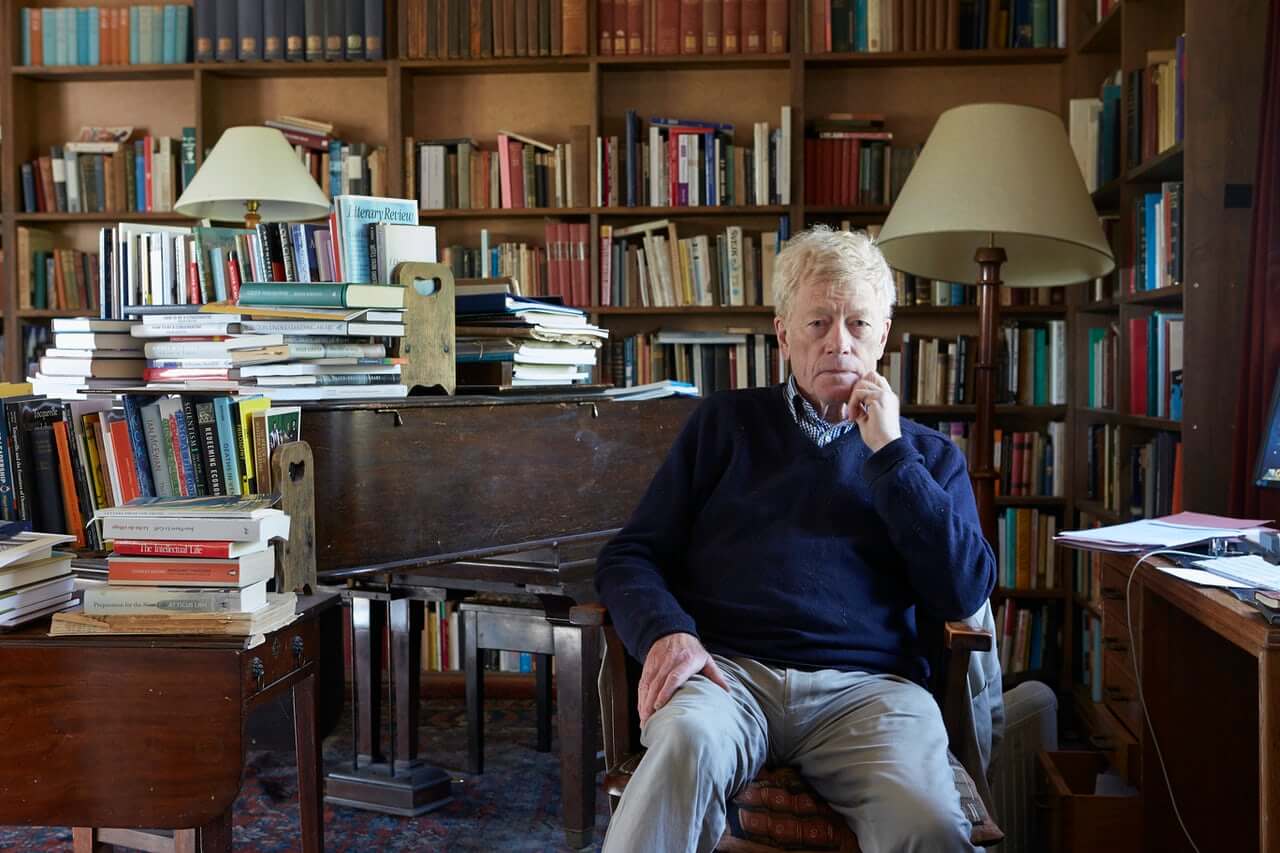
“The result is a thoughtful and nuanced book that testifies to both his theoretical and exegetical talents, solidifying Scruton’s legacy as the most talented conservative writer of his generation.”
Introduction
The late Roger Scruton’s 2017 book On Human Nature is a sequel of sorts to his earlier, 2014 work The Soul of the World, which was a similarly panoramic take on virtually every topic of philosophical importance. Based on a series of lectures given at Princeton University in 2013, the subsequent book is more accessible than its counterpart. Scruton’s tone is ruminative and, at times, even conversational, entirely eschewing the occasional shrillness that undermined other works. The result is a thoughtful and nuanced book that testifies to both his theoretical and exegetical talents, solidifying Scruton’s legacy as the most talented conservative writer of his generation. This is not to say it is without problems, given that Scruton’s reach occasionally exceeds his grasp. He sometimes settles for what are taken as “common sense” views on metaphysical and moral problems that seem to permit no resolution—when the more consistent approach might just be to concede that we do not yet have an answer. Moreover, this tendency to rest on settled possibilities for conservative purposes evades the possibility that the only way to solve these problems might be to turn to radical solutions.
What is Human Nature?
“See in what a state I am! Weep with me and weep for me, all you who feel within yourselves that goodness from which good actions come. Those of you who have no such feeling will not be moved by what I am saying. But do Thou, 0 Lord my God, hear me and look upon me and see me and pity me and heal me, Thou in whose eyes I have become a question to myself: and that is my infirmity.”
– St. Augustine, The Confessions
As the title indicates, Scruton’s book concerns itself with what it means to be a human being. More specifically, he seeks to uphold a venerable conception of the individual as being both a part of the material world and, in some sacred senses, transcending it. This outlook also extends to human relations and ethics and is juxtaposed against all forms of strict materialism. This includes the naturalistic reductionism of the human being by figures like Richard Dawkins and Daniel Dennett; the moral consequentialism of Peter Singer and Derek Parfit; and various forms of militant atheism.
The rest is for members.
All proceeds go toward publishing more writers and poets.
Free for 30 days, then $3 a month
Become a member
This work is preserved in Merion West’s archive of articles and poems published from 2016 through early 2025. Explore the archive