
From the archive
On Mourning for One’s Enemies: Remembering Sir Roger Scruton

“And that is why I will miss Roger Scruton, enemy of my beliefs that he was.”
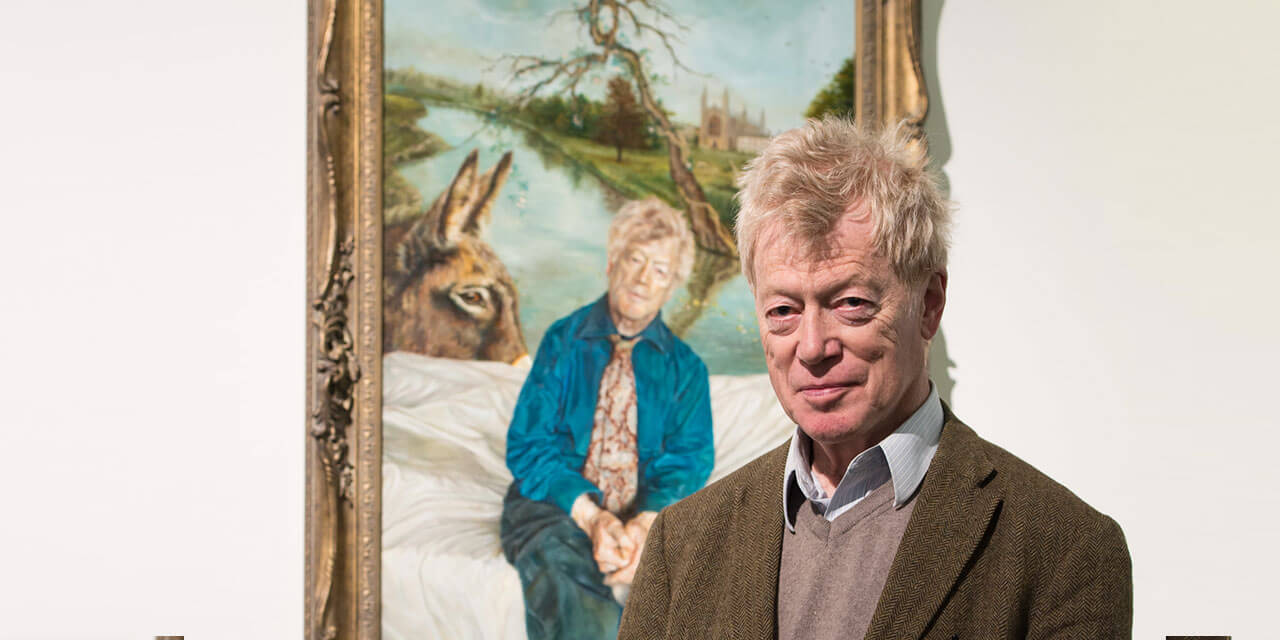
“And that is why I will miss Roger Scruton, enemy of my beliefs that he was.”
Introduction
“To be incapable of taking one’s enemies, one’s accidents, even one’s misdeeds seriously for very long—that is the sign of strong, full natures in whom there is an excess of the power to form, to mold, to recuperate and to forget (a good example of this in modem times is Mirabeau, who had no memory for insults and vile actions done him and was unable to forgive simply because he—forgot). Such a man shakes off with a single shrug many vermin that eat deep into others; here alone genuine ‘love of one’s enemies’ is possible—supposing it to be possible at all on earth. How much reverence has a noble man for his enemies!—and such reverence is a bridge to love.—For he desires his enemy for himself, as his mark of distinction; he can endure no other enemy than one in whom there is nothing to despise and very much to honor!”
Friedrich Nietzsche, The Genealogy of Morals
As a Bernie Sanders supporter who believes our society needs extensive changes, I naturally agreed with Roger Scruton on very little. My first encounter with his work was during my undergraduate degree when he had long been established as the most important conservative intellectual of the era. Getting a grip on his oeuvre was always a challenge since he wrote and published so voluminously on such a wide variety of topics, while also continuously offering lectures and interviews. Not all he said and did was good or even worthwhile. I read his comments about Islam and about LGBTQ individuals with reactions ranging from bemusement to disappointment. As I pointed out in a review of his book Conservatism: An Invitation to the Great Tradition, Scruton had a frustrating way of looking past the myriad sins of conservative thinkers and actors, while fixating entirely on their achievements. The result was often a hagiographic account of conservatism which was inspiring to many on the political right but, at the same time, ignored its darker but often interesting historical corners. On occasion his tendency to be blunt in denouncing political opponents edged close to being shrill rather than just interesting, such as when he denounced honest counter theorists as fools and lunatics.
All of this said, I was saddened to hear of his death earlier this week at the age of 75. Scruton displayed many of the virtues that are difficult to find in today’s one-dimensional media environment, particularly as the influence of post-modern conservatism pushes out genuine thinkers in favor of partisans and conspiracy theorists. He displayed intense erudition, interdisciplinarity, and, above all else, a curiosity about the world. Scruton’s writing moved effortlessly among discussions of literature, philosophy, and politics with prose that was never less than witty—and that brimmed with character. Most importantly, he had a tremendous talent for simplifying complex ideas in a way that kept their nuance and richness intact. His eminently readable manuals like How to Be a Conservative are a case in point. To be able to simplify without loss, one needs to truly understand and admire one’s subject matter. And Scruton surely did whenever he was writing about his beloved topics, and his passion showed on every page.
The rest is for members.
All proceeds go toward publishing more writers and poets.
Free for 30 days, then $3 a month
Become a member
This work is preserved in Merion West’s archive of articles and poems published from 2016 through early 2025. Explore the archive