
From the archive
Kant: the Greatest Liberal Philosopher?

“So what, then, makes someone a liberal? In this piece, I am going to argue that the philosophy of Immanuel Kant provides some clues.”
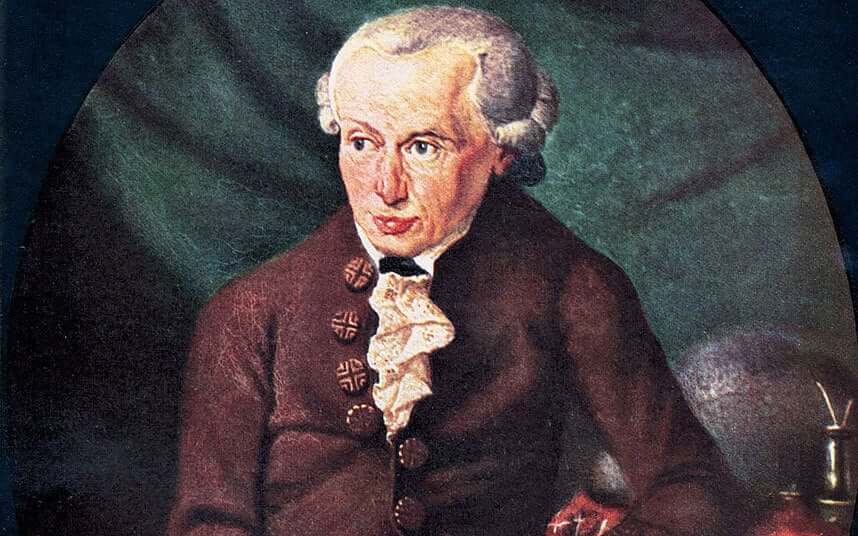
“So what, then, makes someone a liberal? In this piece, I am going to argue that the philosophy of Immanuel Kant provides some clues.”
Introduction
One thing that liberalism’s critics have often understood better than its friends is that the liberal worldview stretches well beyond politics. It is a weltanschauung par excellence: a worldview that includes views on everything from metaphysics and science down to rudimentary social conventions. This is not to say that the liberal tradition speaks with one voice, a point its critics all too often misunderstand. The liberal tradition has included everything from apologists for capitalism like Friedrich Hayek to liberal socialists like John Rawls, defenders of British imperialism such as John Stuart Mill, to vocal opponents of empire like Hannah Arendt. Even describing a so-called liberal attitude is tough since some liberals have defined themselves as optimists about human progress while others are overtly cynical about the possibility of ever achieving real moral improvement.
So what, then, makes someone a liberal? In this piece, I am going to argue that the philosophy of Immanuel Kant provides some clues. This is because Kant was undeniably the greatest liberal thinker. Consequently, the structure of his thought tells us much about what the architecture of the liberal worldview should be, if it developed to a sufficiently high level of sophistication and reflection. This, of course, is not meant to apologize for any weaknesses in Kant’s thinking. He could be a cantankerous racist, as his lectures on anthropology abundantly showed, and his thinking on women and sex would look regressive in a contemporary evangelical church. With that said, I will argue the core of Kant’s metaphysical thinking remains staunchly liberal in two respects. First, it is overtly committed to a modern scientific outlook grounded in the universal structure of the human mind. Second, his criticisms of conventional metaphysics have a strongly anti-reactionary edge.
Kant and the Problem of Metaphysics
“Two things fill the mind with ever new and increasing admiration and awe, the oftener and the more steadily we reflect on them: the starry heavens above and the moral law within. I have not to search for them and conjecture them as though they were veiled in darkness or were in the transcendent region beyond my horizon; I see them before me and connect them directly with the consciousness of my existence. The former begins from the place I occupy in the external world of sense, and enlarges my connection therein to an unbounded extent with worlds upon worlds and systems of systems, and moreover into limitless times of their periodic motion, its beginning and continuance. The second begins from my invisible self, my personality, and exhibits me in a world which has true infinity, but which is traceable only by the understanding, and with which I discern that I am not in a merely contingent but in a universal and necessary connection, as I am also thereby with all those visible worlds. The former view of a countless multitude of worlds annihilates as it were my importance as an animal creature, which after it has been for a short time provided with vital power, one knows not how, must again give back the matter of which it was formed to the planet it inhabits (a mere speck in the universe). The second, on the contrary, infinitely elevates my worth as an intelligence by my personality, in which the moral law reveals to me a life independent of animality and even of the whole sensible world, at least so far as may be inferred from the destination assigned to my existence by this law, a destination not restricted to conditions and limits of this life, but reaching into the infinite.”
The rest is for members.
All proceeds go toward publishing more writers and poets.
Free for 30 days, then $3 a month
Become a member
This work is preserved in Merion West’s archive of articles and poems published from 2016 through early 2025. Explore the archive