From the archive
Editor’s Choice: The Best Articles of 2019

As is tradition at Merion West, here are the editor’s choices for our favorite Merion West articles of 2019.
As is tradition at Merion West, here are the editor’s choices for our favorite Merion West articles of 2019.
5. “The Cinnabon Made Me Do It” by Christian Miller
In this April piece, Professor Christian Miller, a philosopher at Wake Forest University, re-examines an assumption underlying much of moral theory: that one’s capacity to do good (or to fail to do good) is relatively fixed. Miller, by invoking a variable as seemingly trivial as a whiff of a Cinnabon, demonstrates how overwhelmingly various aspects of a given environment can impact helping behavior.
4. “Why People Believe in Conspiracy Theories” by Matt McManus
Matt McManus, in this September essay, seeks to understand why conspiracy theories are so widely adopted and propagated. In the course of examination, McManus puts forward an important idea: “Rather than confronting a world that is chaotic and beyond the purview of human control, negative events can be attributed to an antagonist who is hyper-rational and manipulating everything. The world, then, is no longer a complex and over-determined assemblage of technological changes, economic forces, and political pressures which have primarily destabilized social identity and national homogeneity.” Conspiracy theories, for McManus, are arguably a person’s all-too-human response to make sense of—or ascribe agency—to causes of suffering.
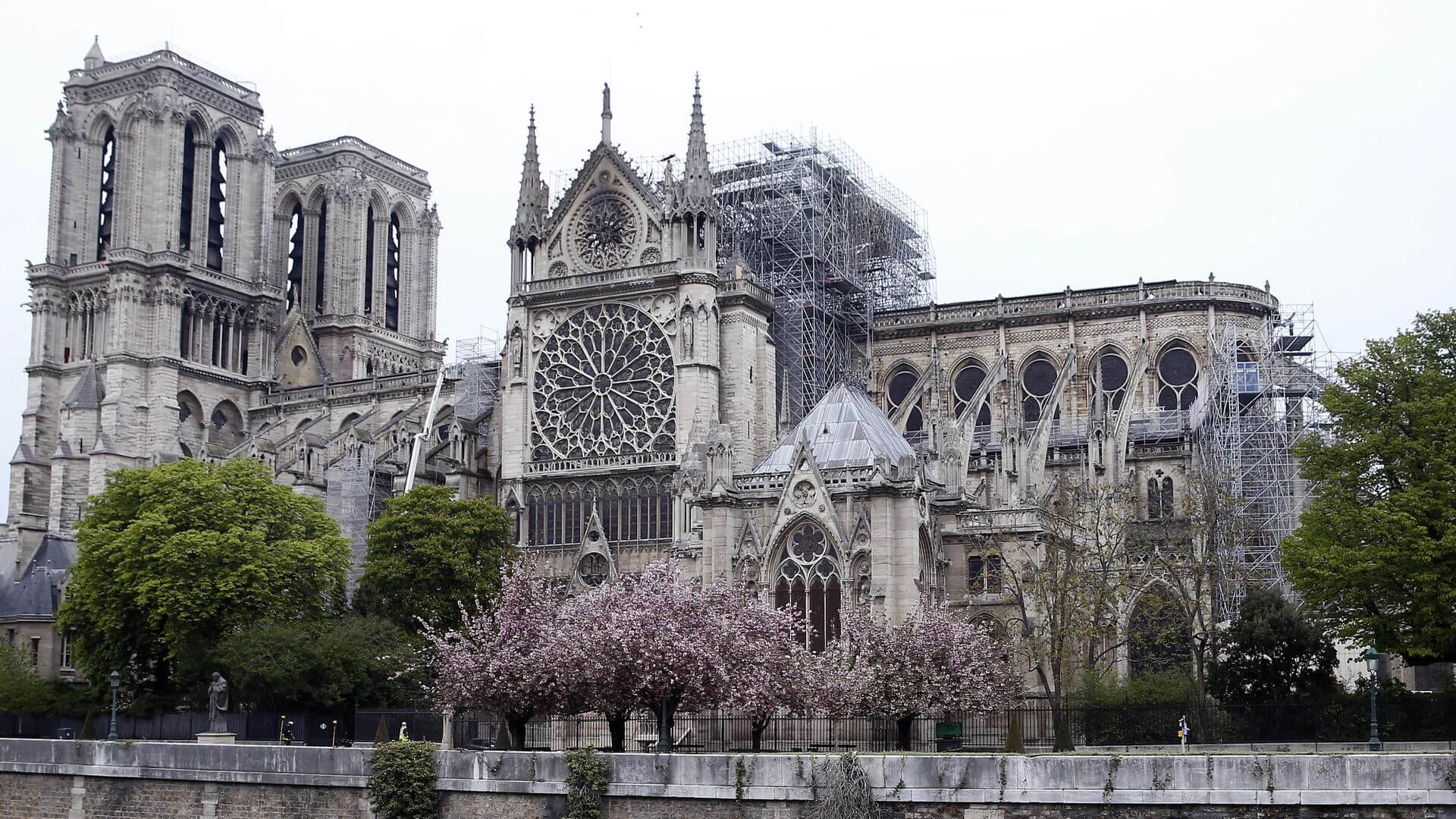
3. “What Notre Dame Says about Civilization” by Henry George
Henry George, writing in April in the days following the fiery damage sustained by the Notre Dame cathedral in Paris, tries to come to terms with how a society processes the loss of one of its most sacred and long-standing symbols. For George (and likely Burke as well), structures as fundamental as Notre Dame unify persons across generations and allow for the individual to be anchored to a sense of continuity with the past and future. When such symbols are lost, gone with them are at least a share of that sense of continuity: “The destruction of Notre Dame has shaken our complacent belief in the permanence of things and the ability for our culture to last without care and cultivation,” George writes.
The rest is for members.
All proceeds go toward publishing more writers and poets.
Free for 30 days, then $3 a month
Become a member
This work is preserved in Merion West’s archive of articles and poems published from 2016 through early 2025. Explore the archive