
From the archive
Answering Slavoj Žižek’s Question: Kant’s Unpopularity

“In his book, Žižek analyzes why Kant and his progeny have been struggling philosophically in recent years, while offering a partial defense of their views.”
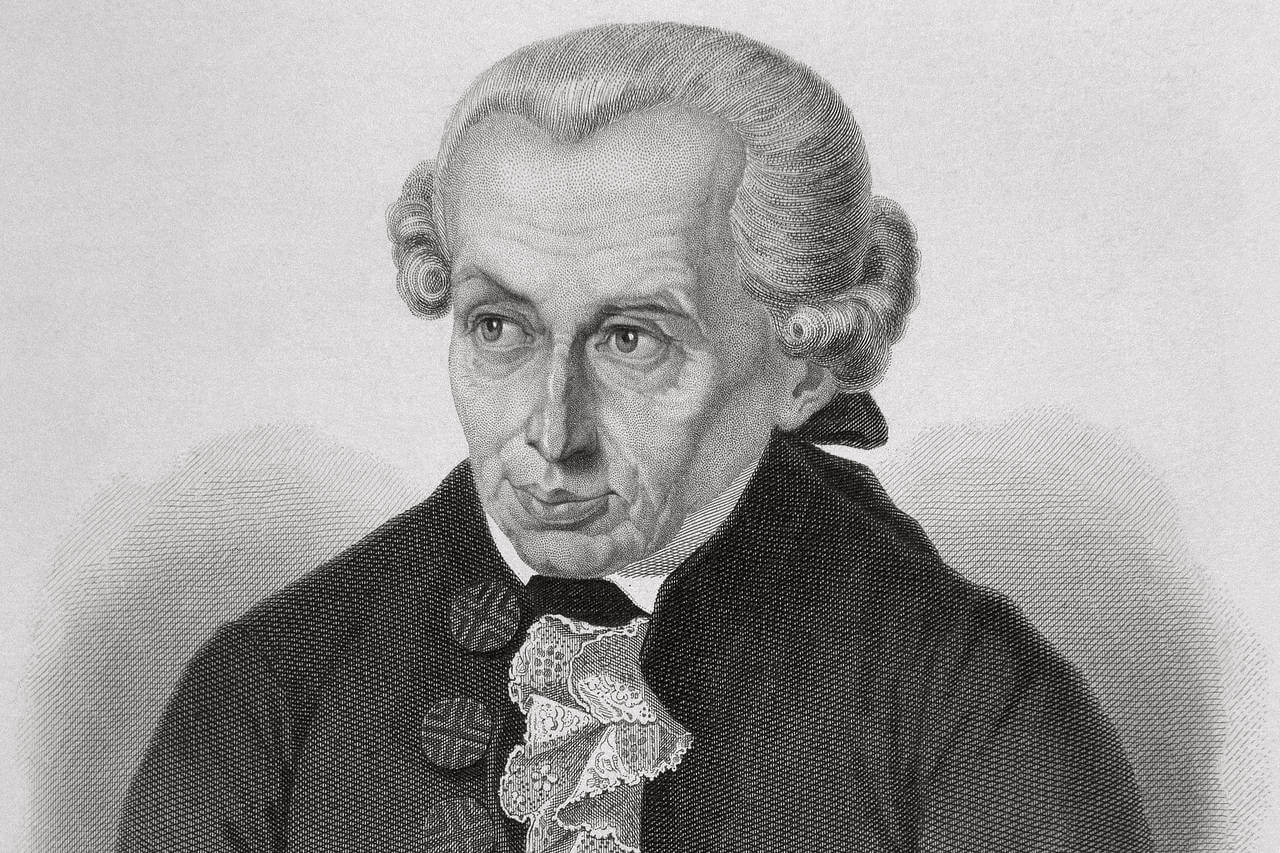
“In his book, Žižek analyzes why Kant and his progeny have been struggling philosophically in recent years, while offering a partial defense of their views.”
Introduction
As Slavoj Žižek opined as far back as his 1999 book The Ticklish Subject, the broadly Kantian theory of the subject and morality remains widely unpopular in critical circles. In his book, Žižek analyzes why Kant and his progeny have been struggling philosophically in recent years, while offering a partial defense of their views.
One of the most important philosophical ideas in liberal thought has been that the individual—or the subject (as it is sometimes called)—should be at the center of moral and political analysis. For Locke, each individual possessed natural rights to life, liberty, and property, which no government could abridge. For J.S Mill, the individual was to be regarded as sovereign over himself or herself. And more prominently still, for Immanuel Kant, the individual subject was the only being which could have intrinsic worth beyond price. This was because only the individual could have the good will to legislate the moral law. It is hard to stress how influential these ideas have been—and the role they’ve played in putting the individual and their acts at the epicenter of our thinking.
This view, however, has been associated with vulgar humanism, liberal conformism, and capitalist apologetics. This perhaps explains why the 18th century Prussian’s contemporary disciples such as Jürgen Habermas and John Rawls are consistently criticized by more radical commentators. What I want to explore in this brief article is where this strong opposition comes from—beyond the more technical contentions with this or that philosophical point in the Kantian system. I believe the key reason Kantian theories of the subject and morality remain unpopular is primarily because so much moral emphasis is placed on the values of actions. By contrast, many contemporary philosophers, following the French philosopher Gilles Deleuze, believe it makes more sense to look at the value of life and more specifically “how to live.” The more emancipatory connotations of the latter position naturally make it more attractive to critical theorists, as well as a great variety of activists.
Kant and the Philosophy of Life
In some respects, claiming Deleuze comes across as more emancipatory than Kant may seem a strange argument. After all wasn’t Kant the philosopher of human freedom par excellence—the liberal’s liberal who claimed that only the subject’s good and “free” will were intrinsically valuable for themselves? Of course, there is something to this old cliché, and, as I’ve explained elsewhere, I think this at least partly accounts for why many contemporary traditionalist conservatives like Yoram Hazony express such disdain for Kantianism. Kantianism’s strong emphasis on individual freedom runs counter to a commitment to traditionalism—and to a state’s enforcement of national and religious homogeneity.
The rest is for members.
All proceeds go toward publishing more writers and poets.
Free for 30 days, then $3 a month
Become a member
This work is preserved in Merion West’s archive of articles and poems published from 2016 through early 2025. Explore the archive