
From the archive
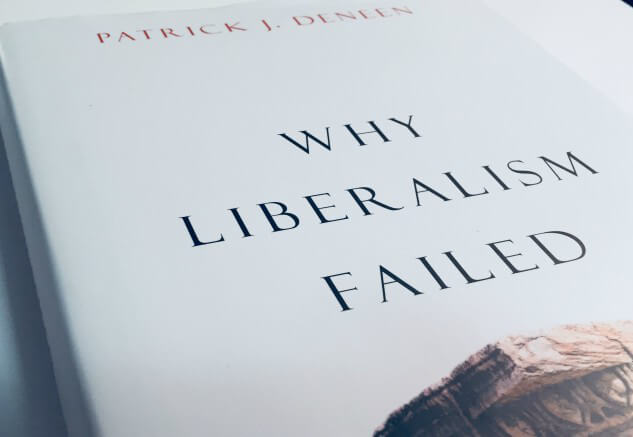
All Good Things Must Come to an End: An Overview of “Why Liberalism Failed”
“So is Deneen right? Has liberalism failed? I think in the long run nothing wrought by the hand of man lasts forever. This includes political ideologies. We have a tendency to naturalize the world as it is and assume that things can never change.”

“So is Deneen right? Has liberalism failed? I think in the long run nothing wrought by the hand of man lasts forever. This includes political ideologies. We have a tendency to naturalize the world as it is and assume that things can never change.”
Patrick Deneen’s provocative new book Why Liberalism Failed is attracting the kind of attention that few academic works ever see. Even more unusually, it has enjoyed positive commentary from across the political spectrum. The National Review’s David French praised the book for making him “think” and presented an “alluring” vision of alternatives to the liberal order. The far-left Jacobin opined that Deneen’s book is the rare piece of anti-capitalist writing by a conservative that offers a “bold and seasonable” overview of liberalism’s problems. The New York Times placed Why Liberalism Failed on its Book of the Times list and opined that “readers of all political stripes” could find something in the book that “rings true.”
These accolades belie the fact that Deneen’s book pivots around an extraordinary—almost unbelievable—thesis: liberalism isn’t just in a crisis, it is on its deathbed. More radically still, according to Deneen, liberalism is in the twilight of its life not because it failed, but because it has “succeeded” tremendously. This dialectical inversion is a claim worthy of Hegel or Marx, and it deserves to be treated with the same seriousness. That Deneen’s book has warranted such accolades testifies to the power of his argument, even if very few commentators so far have been willing to accept his very radical thesis that liberalism is on the way out. Indeed, that such an argument is even given serious—coming less than thirty years after Francis Fukuyama proclaimed liberalism had triumphed and brought the “end of history”—is a testament to the strange times we inhabit within post-modern, liberal culture.
The Meaninglessness of Partisanship
Deneen’s book is utterly unique in its steadfast unwillingness to situate itself within traditional political categories. In this age of hyper-partisan wrangling, where “liberal” is almost inevitably followed by “cuck” or “conservative” by “racist,” such an approach is an invigorating breath of fresh air. Or at least it would be if Deneen’s reasoning for such a position weren’t so damning.
The rest is for members.
All proceeds go toward publishing more writers and poets.
Free for 30 days, then $3 a month
Become a member
This work is preserved in Merion West’s archive of articles and poems published from 2016 through early 2025. Explore the archive