
From the archive
A Veteran Biotech Leader’s Call to Rebuild Public Trust
Jeremy Levin, former CEO of Teva, co-founder of Ovid Therapeutics, and chairman emeritus of BIO, the biotechnology industry’s largest trade group. He tells Henri Mattila that drugmakers owe a duty to patients, not just shareholders, and that Washington must treat biotech as a strategic asset.
Dr. Jeremy Levin is on a mission to help rebuild public trust in the biopharmaceutical industry. Even those who hold a generally positive view of the industry, counting myself among this minority, can hardly ignore the evidence that most Americans have little trust in pharmaceutical companies to act in the public’s best interest.
Levin’s résumé alone was enough to persuade me to pay attention to his diagnoses and recommendations when I had the chance to speak with him.
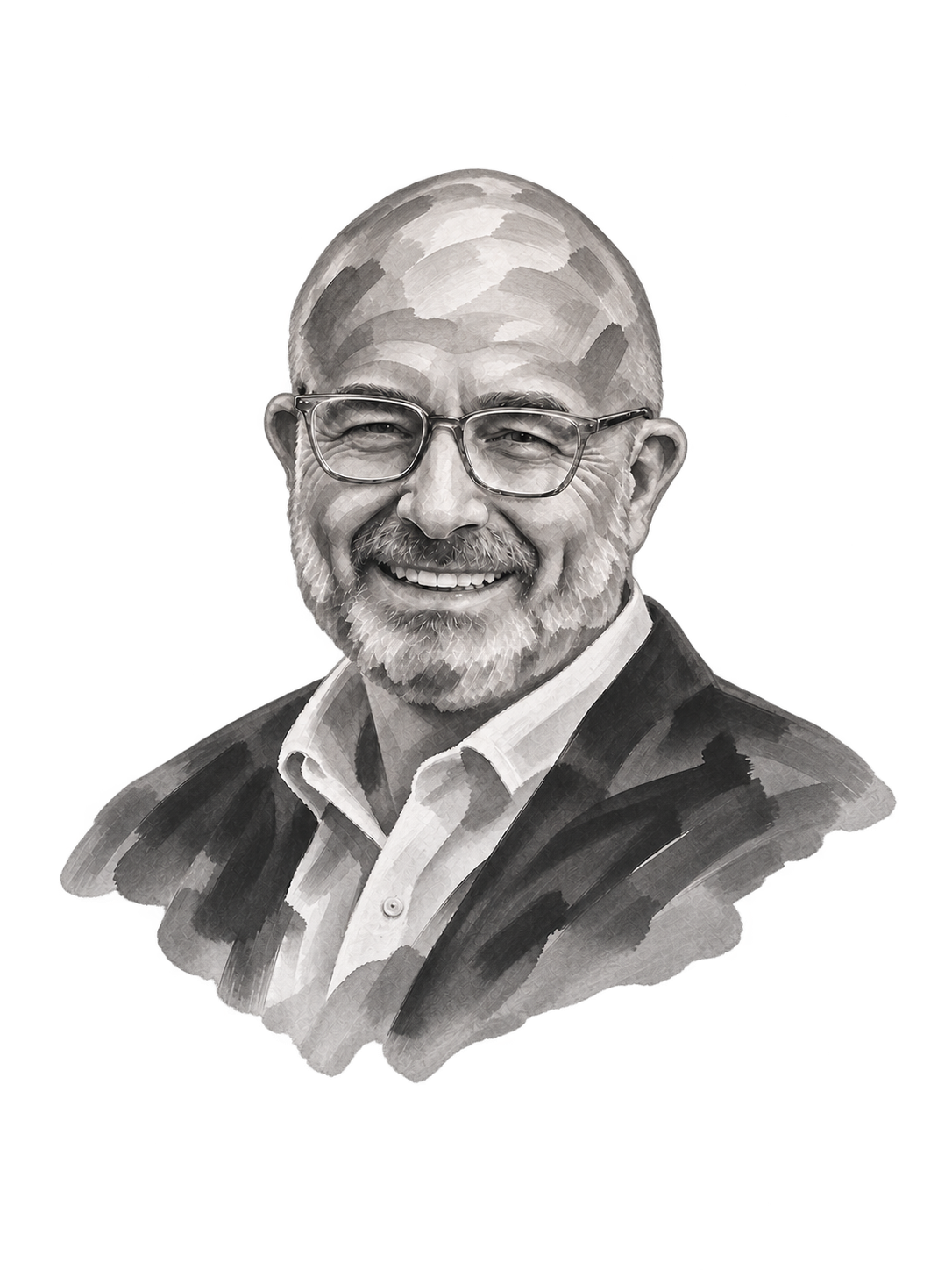
A physician-scientist educated at Oxford and Cambridge, he has held leadership roles at the pharmaceutical giants Novartis and Bristol Myers Squibb, co-founded Ovid Therapeutics, which develops medicines for neurological disorders, and chaired the Biotechnology Innovation Organization, the world’s largest biotechnology advocacy association, representing companies and research institutions.
He also served as chief executive of Teva, one of the world’s largest manufacturers of generic medicines. To my surprise, Levin told me he had not wanted the job. He agreed only after former Israeli Prime Minister Shimon Peres told him that rescuing the struggling company was his national service. (I came to appreciate what that meant after hearing about his family’s flight from apartheid South Africa and Rhodesia and the time he spent in Israel as a child.)
Today, he argues that the men and women who lead the pharmaceutical industry have a duty of their own—one owed to patients and citizens, not merely shareholders. In a spirit reminiscent of the Hippocratic oath, he believes members of the biopharmaceutical industry should hold themselves to a higher ethical standard than their counterparts in other sectors. He points to Johnson & Johnson’s 1943 Credo as the standard the industry once embraced, and one most companies walked away from in the 1970s and 1980s. In Biotech in the Balance: Saving a Strategic Industry in an Age of Distrust, published earlier this year, he proposes “ten commitments,” from defending independent science to putting patient welfare ahead of political or financial pressure.
Levin places special emphasis on identifying and developing new medicines, sharing my view that more needs to be done to encourage the risky, expensive, and lengthy process of drug development. I have found the evidence for drug price reform and reducing the power of middlemen convincing (the Federal Trade Commission’s interim reports on pharmacy benefit managers are a good place to start), and Levin is, if anything, harsher: pharmacy benefit managers, he told me, “add zero value.” But he also offers ideas of his own, some less conventional than others. One of the less conventional is making it illegal to reward pharmaceutical executives for raising the prices of existing drugs, and instead rewarding them for net new sales: keeping patients on their medicines and launching new ones. In spirit, I cannot help but agree. As for putting it into practice, I have grave doubts.
But the private sector is only one part of the system. Levin also calls on government, which he argues bears responsibility for creating the conditions in which biomedical innovation can thrive.
Breaking from the diplomatic tone common in the industry, he is blunt in his assessment of the nation’s lawmakers. As he put it when we spoke in early November:
“America has demonstrated that it does not care about biotech. It has never stated that it is a strategic asset up until the last few weeks, when the words are slowly permeating in.”
Pointing to China’s rise in drug innovation over the past two decades, he argues that the United States has failed to treat biotechnology as a national strategic priority. Yet he sees signs that lawmakers are waking up. He points to the 2025 action plan developed by the National Security Commission on Emerging Biotechnology, chaired by Senator Todd Young, as an imperfect but important first step toward strengthening America’s position.
Whether Washington follows through remains to be seen.
Reflecting on our conversation, I was struck by how rarely one hears such unvarnished views from inside an industry where frank opinions are often filtered through layers of compliance and legal review. Few people understand the business as well as Levin, and if the industry hopes to win back the public’s trust, it will need more leaders willing to speak this plainly.
This transcript has been edited for length and clarity.
Tell me about yourself: where you’re from and how you ended up where you are today.
I was raised in a tiny Afrikaans-speaking family in the Western Cape, on a farm. We fled, went to Rhodesia and Zambia, and I was sent to Israel and then England for schooling. I finished my schooling in England, did my Ph.D. at Oxford, and then went over to Cambridge and did my medical degree. I practiced medicine in Europe, then decided to come to the United States for one year to see what this wonderful thing biotechnology was.
I started in a tiny company doing genetic testing, then went through Genzyme and Novartis. At Novartis, I did major deals, including, in the early days, Alnylam. Subsequently, I went to Bristol Myers Squibb, which was considered a failing company. My job was to revitalize the pipeline. We created the “String of Pearls” and introduced the concept of immuno-oncology, which nobody agreed with. They thought it was a stupid idea. We went from four trials to fifty percent of all trials by the end of the first decade, and fifty percent of all R&D in the same area.
My resignation was pre-signed if the trial involving the company I bought, Medarex, failed. I was the only person at Bristol willing to do it; everybody else opposed it. I went from there to Teva. I didn’t want to go to Teva. It was a failing company because its business model was failing, and it was based on first-to-file and things like that.
Finally, I got a call from Shimon Peres, whom I had known from my past in Israel. Shimon said I had to come back and do my national service again.
To work for Teva?
To work for Teva. Teva was very flawed. I did my best to change it, brought it to a point where you could change it, and the board didn’t want to change it. So I left, came back to America, and decided that, rather than go back into a big company, I was going to put my neck on the line and go straight back into innovation and patients.
I decided to go into neurology because that’s where nobody else was. I started to build a portfolio, and I’ve worked in that for over ten years. That has now resulted in a wonderful pipeline at Ovid. At the beginning of this year, I asked Meg, my successor, to take over. I’m executive chairman there.
Now I look for unusual problems that nobody else wants to touch because they look interesting, and the science is there, but people are worried about something. I don’t get worried about pretty much anything in these companies, except for bad, illegal behavior.
There’s one in Australia that I’m leading, a women’s health organization, in an unusual area called lymphangioleiomyomatosis, or LAM. It affects 100,000 women. It’s a lymphatic disorder that starts with a mutation in a cell that looks like a muscle cell. That mutation migrates up the lymph system, goes into the lungs, and destroys the lungs. These women start to become breathless, and eventually they have to have a lung transplant if they don’t get stabilized on the current, very bad drug, sirolimus.
I spend my time on rare disorders, niches that you can crack. I put money into LAM. I’m going to fix that company, and if a drug works, it’s going to change women’s lives. It’s all about changing people’s lives. It also gives me the chance to see the Australian and Southeast Asian environment, as well as the European and American environments.
May I ask why your family fled South Africa for Rhodesia?
My father was politically active. He disagreed with apartheid, became very friendly with Nelson Mandela, and when Mandela went to jail, the South African government made it very clear to him that he needed to leave or go to jail. We fled.
In Rhodesia, it was the same story. He started a newspaper for Africans. The result was exactly the same: He had to flee overnight and went to Zambia. He was eventually assassinated in 1977. He was poisoned. We don’t know by whom. It could have been Russians, it could have been a Black African nationalist extremist, or it could have been the South Africans. We have no idea.
You started out as a doctor?
My Ph.D. was first. I did a Ph.D. at Oxford on the thermodynamics of DNA supercoiling, at the Dunn School.
While I was doing that, I taught medical students and decided to do the exams they were doing. I did all my preclinical medicine while I was doing my doctorate, then went to Cambridge, where I was given a scholarship to do a two-year clinical medicine program. It was the most intense medicine program, I believe, in Europe: You didn’t get weekends; you worked two years nonstop.
I graduated from Cambridge with a medical degree, worked in liver transplant, internal medicine, and cardiology, and finally took a fellowship in internal medicine in Geneva. Then I went back to South Africa before coming to the United States to take a look.
Had you stayed in Europe, do you think you ever would have ended up with your biotech or pharmaceutical career taking off?
No. Europe’s concept of biotechnology at the time was contemptuous. The large pharmaceutical companies were extraordinarily conservative. They were basically companies generating cash and hoping that they would launch drugs that would be successful, but they had no concept of innovation. With very few exceptions, the innovation was American.
The birth of biotechnology, you can put your finger on it: 1973 at Stanford, where venture capitalists meet a scientist, and then, three years later, Genentech is born. In Europe, that concept was considered bizarre. Why would anybody put risky capital into things that consume cash?
I am certain that had I stayed there, I would have had a very good professorship and an academic life. It would have been very satisfying, I’m sure, but not nearly to the extent of the opportunity I had in America.
I’ve gotten pretty defensive of the American system. I would argue that our bio-innovation ecosystem is relatively better than the rest of the Western world because the incentive structure is better. Americans pay more for drugs, and the Hatch-Waxman compromise allows us to offer sufficient returns for risk capital. Having worked in venture capital, I know the odds are stacked against you. I argue that high drug prices are a beautiful thing because, if they went to European or Chinese levels, innovation here would probably drop out. What are your first reactions?
The American system is about drug pricing, but also about the concept that life extension and quality of life are considered of great importance in this country. In Europe, life extension is not considered essential. You put much greater emphasis on the quality of the living person. It’s quite ironic that we have things called QALYs in Great Britain, because many times you will not try to treat a patient if you believe they are going to die.
In America, you are obliged to treat people until they say to you, “Enough,” and even then you may continue to treat them, which is a different story. There are different philosophical approaches toward life in the two societies, and I would argue the same applies in China and many other parts of the world.
The second item is pricing. Pricing is complex because, at the end of the day, pricing is about how much you pay as an individual. In this country, we have developed the most complex system for requiring the individual to pay for medicines. There’s a flawed concept that the individual has to have “skin in the game.”
For heaven’s sake, they’ve paid insurance. They have the disease, and now they’re having to pay after having paid for insurance. This is an absurdity. You don’t need to have skin in the game beyond having a terrible disease. That’s the moment when society and the insurance company should be giving back.
People have to go to CVS or Walmart, put a hand in their pocket, and put cash on the table for a drug. This is not right. The insurance companies do their level best not to pay for the drugs. In hospital systems, which have more leverage, they do pay and do cover. There’s a hugely complicated issue around how much you have to pull out of your pocket and how much insurance actually covers.
Our system is enormously overcomplicated, particularly when you start layering in the PBMs, and so on. These people add zero value. You’re buying into a system that is paying all these people along the way, who get a little piece of the pie.
We don’t have a free market for drugs at all. We have a system in which the product has layer upon layer of expense going into service companies. Pricing certainly stimulated innovation, but net pricing is what matters.
People like to think that America’s medical system is a free-market version, in contrast to what they call socialized medicine elsewhere. But there’s nothing traditionally free-market about this, and there’s no price transparency.
Zero price transparency. When you go in and get Tylenol, you do not know, for the dollar you pay, how much of that is actually the pill. You’re paying some middleman along the way to get that pill.
It took me a long time to wrap my mind around what PBMs do. I think they’re obscure by nature.
Conceptually, PBMs are great: “I’m going to negotiate a price which will be good for you.” However, when you look at the structure of their compensation, it’s a percentage of the drug price. This is an absurdity. They’re incentivized to raise the price. Then they get bought by the insurance companies.
You go from an idea of controlling pricing, making sure we get fair pricing and that insurance pays for it, to a system of jacking up prices and paying service providers. This is not a free market. This is a monopoly market. People say, “There are many different big insurance companies.” That is just not true. You can see it because the same drug offered by one insurance company is the same price as the other. How can that be if this was a free market?
I wanted to ask you about China. In an article you wrote earlier this year, you argued that innovation ecosystems are strategic national assets: They take decades to build and can be lost faster than they can be rebuilt. Can you explain what you mean?
The underlying premise is that if you cure individuals of diseases, you increase the economic health of the country, and you increase its social cohesion. Healthy countries work better.
The second premise is that you can never be held hostage by another nation holding a drug. We saw hints of this when COVID came and people were rationing COVID vaccines. If you run into a political dispute, it’s not like another product where, if you don’t have it, you might be able to make do with something else.
Imagine for one minute if propofol, a critical anesthetic, were no longer available to us because it was in the hands of Russia, which decided not to give it to us. That will tell you in one minute why this is a strategic industry. Medicines are strategic.
The countries that have understood this are creating the economic backbone, the educational backbone for the people who will staff it, and the economic incentives. They are telling people that this is important for their country, that the government will facilitate growth, and then it does.
In China’s case, it did exactly this. There were five steps. It started by saying, “We’re going to figure out how to make APIs.” It became one of the world’s largest producers of active pharmaceutical ingredients, including the vast bulk of antibiotics.
Step two was testing drugs: cellular, biochemical, and animal testing. You have the rise of WuXi and contract research organizations in China. They offer services around the world and grow like sons of guns.
Step three was putting in regulatory systems to ensure that clinical trials could go incredibly fast, and starting to test things in their own labs. You have new molecules coming along, lookalikes. America laughs and says, “Lookalikes, generics, not that interesting.” The Chinese then state that by 2035 they’re going to have the majority of novel drugs being produced.
Step four was “bring back the turtles.” Everybody who had learned abroad how to do science was given an opportunity, a lab, and an incentive to come back and build medicines. You then have multiple deals with pharmaceutical companies for novel molecules. The Chinese government has stated that it aims to have twenty-five percent of all novel drugs by 2030.
Step five hasn’t yet been executed. But you can draw it by inference from other national industries: batteries, magnets, solar systems, and electric cars. At the end of the day, they have a political context: If you would like our medicines, batteries, or solar systems, you need to conform with our trade policies.
The big pharmaceutical companies have taken huge advantage of step four, and venture capitalists are pouring capital into China. There’s nothing wrong with that, because they’re hunting down drugs. What’s happening in America is exactly the opposite.
America started in 1947 with the NIH. You go through a period of immense growth, and in 1973 you get Boyer and discoveries that led toward the creation of the first biotech company. Pharmaceutical companies take no notice. Congress takes no steps to build an infrastructure for biotech and thinks of them as pharma companies. The big pharma companies are feeding at the trough of high drug prices and feeling good about Hatch-Waxman. But nobody’s looking at innovation, unlike China.
We do some pretty good things: We build a great FDA, build a great CDC, and fund the NIH. By the end of 2025, seventy percent of all new pharmaceutical drugs were being produced by American biotech companies and sold into the pharma divisions. They’re two different businesses, but biotech was never recognized as a strategic asset. It was an afterthought tucked in under pharma. Whenever pharma sneezed, biotech had to take out a handkerchief.
Then the current administration walks in and begins dismantling and politicizing the NIH, exactly opposite to China. It goes to the FDA, and in the first three months, twenty percent of the place is gone. Many approvals are ongoing, but the underlying infrastructure is in shambles and will only be rebuilt when there is stability. They can’t recruit anybody at the FDA because the HR department was among those fired.
Congress sees the pharmaceutical industry as a wonderful piñata to get votes against, whether you’re a Democrat or a Republican. If I say I’m reducing prices, everybody loves you.
America has demonstrated that it does not care about biotech. It has never stated that it is a strategic asset until the last few weeks, when the words are slowly permeating in. China has outcompeted America, hands down, and it will only accelerate now because of the actions taken by this administration. Some of it was coming before, believe you me.
On China, I have a dataset I compiled of 4,500 pharmaceutical transactions since 2018. In 2018, China-origin deals—Chinese out-licensing—represented less than one percent worldwide. Now, in 2026, it’s seventeen percent. There’s this idea that Chinese assets are cheap, that you get a bargain. Not true at all. The median upfronts are actually $25 million versus $15 million for the rest of the world. China is producing first-in-class drugs, and in bispecifics and antibody-drug conjugates, it’s the leader now. To your point, China is well on its way to meeting its target. What do you think is the best solution?
The first is to acknowledge that we’re behind now. Once you do that, you have to analyze what needs to be done.
There’s a report, Charting the Future of Biotechnology: An Action Plan for American Security and Prosperity, produced in April 2025 by the National Security Commission on Emerging Biotechnology. I would urge you to get a copy. Senator Todd Young and Michelle Rozo led it. It’s not ideal, but it starts the process of saying that this is a national strategic asset.
On a more granular level, you have to get this administration to remove politics from NIH funding and ensure that immigration is freed up so that you get the best of the best coming to this country. You need a coherent, stable FDA that is able to give predictable results, with leadership that is professional and not political. You need to rebuild the CDC. The CDC at this stage is gutted. There is no way of saying what the prevalence of diseases is across this nation at this stage. That whole issue has been deeply flawed by the current administration.
You could address the tax code. Biotech is roughly a ten-year cycle from concept to product. Our tax code doesn’t understand that. If you invest and buy stock and sell it before one year, you pay income tax. If you sell it after one year, it’s capital gains. But after one year, the capital gains treatment remains the same for ten years. You have no incentive to hold that stock beyond one year.
A simple change would allow you to say, “You’ve held it for five years. We’re going to reduce your tax again by half. Hold it for ten years, and you don’t pay any tax.” There are tools in real estate for how you allocate and write off losses. Those tools were used to stimulate the real estate environment. We can do exactly the same for biotech. Real estate is long-term financing for a project. So is biotech.
You have venture funds where the structure of their losses cannot be attributed across funds. Why would you not address how you raise and distribute profits and losses across funds? You have the capital markets; you just haven’t built the tools for biotech.
But it can’t be divorced from politically free investment in pure sciences, immigration incentives to get the best of the best, and concepts that incentivize building innovation in America.
In the pharmaceutical industry, the compensation structure says that you are never compensated for innovation. You’re compensated for the top line, the bottom line, and supposedly long-term shareholder value, which people say accommodates innovation. It does not. The top line is a function of price rises as much as it is of new sales.
You could make it illegal to compensate in the pharmaceutical industry for a price rise, but incentivize net new sales: retaining patients on the drug and launching new drugs. Then everybody stops saying, “I’m going to raise prices,” and says, “I’m going to launch new drugs and keep more patients on them.”
Stock buybacks are used all the time, but they’re often used to adjust earnings. When you get near the end of the year and your profitability hasn’t been so great, you buy back stock, reduce the number of shares, and your earnings look great. That is a fig leaf. That, in and of itself, should be stopped. If you took that same money and invested it in biotech, you’d have a much better return.
Not only do you need to address capital investment in the small companies, you need to address the compensation structure of the big companies.
Tell me about the ten covenants. We’ve seen a recent example with Vivek.
The letter ties directly into this. At its core, what I’m trying to address is that we, as an industry, have lost our covenant with the patient. Patients don’t like our industry, period. They don’t even know what biotech is, but they do know they don’t like the pharmaceutical industry, and we’re the pharmaceutical industry.
The number one item in the ten covenants is to rebuild trust with the outside world. Why is that important? If you have no trust with patients, they won’t enroll. If you have no trust with patients who need a medicine, they won’t trust your drug; they won’t buy the drug. They’ll become skeptical. And if you have no trust, when a politician says, “These evil guys are destroying our country,” they’re going to say, “Yes, we’re going to elect you.”
Nine of the ten are directed to us: steps that we could take to build trust with the American public. In doing so, we will ensure that politicians who beat on us and use us as a political piñata face resistance from a significant portion of the populace. The tenth is rebuilding the infrastructure of biotech in the way I described. That’s a commitment I’d like to see the administration take.
I don’t normally go out with the intent to tackle a politician. However, Vivek issued an advert which was outrageous. It was more than that it was outrageous: It came from Vivek, somebody who has built his entire fortune and his entire base on our industry. It violates the very core of why what we do is so important.
His concept of using distress, anguish, disorder, and abuse is nothing short of a complete violation of the reasons this industry was built. I don’t know whether others wanted to speak out or didn’t want to, but a lot of people seem to have supported this. It is intolerable.
This is a Martin Shkreli moment, where Martin Shkreli abused the system to make himself rich. This was worse: This was abusing the system to make himself powerful. To my mind, there’s no difference between the two.
It certainly doesn’t engender trust between the patient, the public, and the industry.
No, it harms it profoundly. It goes to the heart of harming our industry. Now we have the scandal of somebody who is a politician, a noted politician, and an extraordinarily bright person, who is doing nothing that’s illegal, but who has demonstrated to people that our industry breeds people who will attack the moral fiber of what we’re trying to accomplish.
I tend to take the view that markets should function themselves and that companies are more or less amoral actors. As long as they don’t break the law, they should be free to do what they want because, in theory, in a perfect free market, they respond to the needs of the consumer. Government can regulate industries such as cigarettes, alcohol, and drugs. But even as an employee in pharma, though I’m not a medical professional, I feel there is a moral basis for what we do. Perhaps people developing drugs, or involved in organizations that develop them, should consider themselves differently. It’s not just working in tech and creating apps.
The stakeholders in our industry were beautifully described in the Johnson & Johnson Credo. Beautifully described, 1947, four paragraphs. An extraordinary document. If our industry had adhered to that document throughout our history, I think we’d be in a different position. We would be respected to this day. Somewhere along the 1970s and 1980s, the pharmaceutical industry walked away from that—not all, but most.
There used to be a sense of civic duty among car manufacturers, for example, that they owed something to the citizens.
They are accountable to us.