
From the archive
Review: Matt McManus’ “The Rise of Post-Modern Conservatism”

“McManus draws a historical trajectory that sees conservatives responding to the challenges of socialism, communism, and fascism by hardening Burke’s pragmatic project into an ideology: what we now call neoliberalism.”
“McManus draws a historical trajectory that sees conservatives responding to the challenges of socialism, communism, and fascism by hardening Burke’s pragmatic project into an ideology: what we now call neoliberalism.”
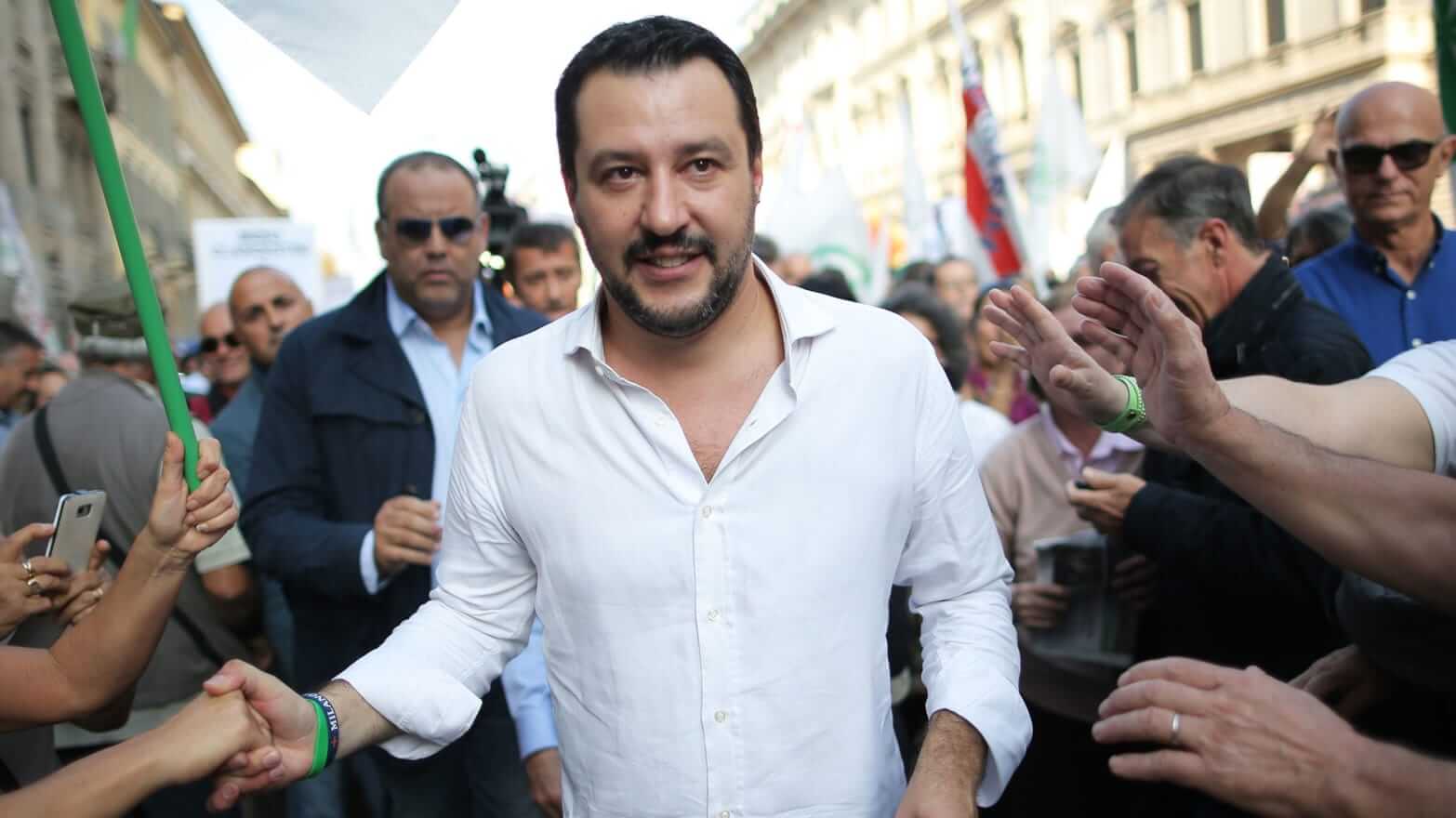
One of the most remarkable aspects of the political tris Donald Trump, Boris Johnson and Italy’s Matteo Salvini is the myopia with which they govern, leading all three to practically hamstring themselves while in office. Whether through the breaches of national security and protocol that virtually beg impeachment for President Trump—or an almost comic ceding of their own power (as Salvini collapsed his own government and Johnson sacked 21 of his colleagues)—the right-wing imperative to rule for the national good finds itself barely able to rule at all. Such tragicomedy serves to support the main thesis of Matt McManus’s The Rise of Post-Modern Conservatism, a philosophical study of the rise of right-wing populism conducted in real time. His narrative centers on the failure of the populist right to provide a meaningful substitute for neoliberalism, particularly in an age where the Internet has brought forward so much democratizing power. Meanwhile, unfair practices of the neoliberal era, including a jettisoning of welfarism and the corporatization of adult education, are maintained and even exacerbated.
McManus himself is a rare figure, being closely linked with a number of self-declared socialists and communists who make up the online left—yet demonstrating an unwavering patience for more moderate factions on the Left. Make no mistake that in our extreme times such a project stands out. The rightward trend in our discourse today, partly promoted by Internet activity and stoked by figures such as former presidential adviser Steve Bannon and writer and psychologist Jordan Peterson, has prompted a solidly left backlash on social media, YouTube, and online message boards. As such, The Rise of Post-Modern Conservatism’s concluding calls for globally coordinated developmental funds and localized wealth taxes (backed up by increased global democratic participation) are refreshing in their far reaching sobriety. Implementation of these policies depends surely on functioning pluralistic democracies achieving consensus among various factions, representing more a case of encouraged altruism than wealth seizure. Of course, one suspects that even these relatively centrist policies would cause alarm for certain sectors of the right-leaning media. Although an emphasis on political procedure and redistribution by consensus appears far more practicable than the well-intentioned red flag waving, hammer and sickle wearing utterances of the far left online.
McManus arrives at his sketched plan for a counter to populist right governance in the study’s concluding section via an earlier consideration of postmodern conservatism’s genealogy and its political rise. First, McManus is clear to note that while the post-truthism of postmodern conservatism may seem to be wholesale co-opted from the postmodern left (such as Lyotard, Derrida and Foucault), it does have precedents in Edmund Burke’s Reflections on the Revolution in France in 1790. Burke was skeptical about the existence of an objective truth that could ground common morality, arguing for a clearly defined legal and political code. Influenced by the terror unleashed in France in the revolutionary years, he argued for a basic set of rules for engagement, so as to mitigate against freedom tipping over into tyranny.
The rest is for members.
All proceeds go toward publishing more writers and poets.
Free for 30 days, then $3 a month
Become a member
This work is preserved in Merion West’s archive of articles and poems published from 2016 through early 2025. Explore the archive