
From the archive
“OK, Boomer!” Understood

“Old leftists fully wish to hold Trump, Johnson, Bolsonaro, Salvini and co., to account for their post-truthism. Meanwhile the younger leftist is likely to be ‘post-truth’ themselves.”
“Old leftists fully wish to hold Trump, Johnson, Bolsonaro, Salvini and co., to account for their post-truthism. Meanwhile the younger leftist is likely to be ‘post-truth’ themselves.”
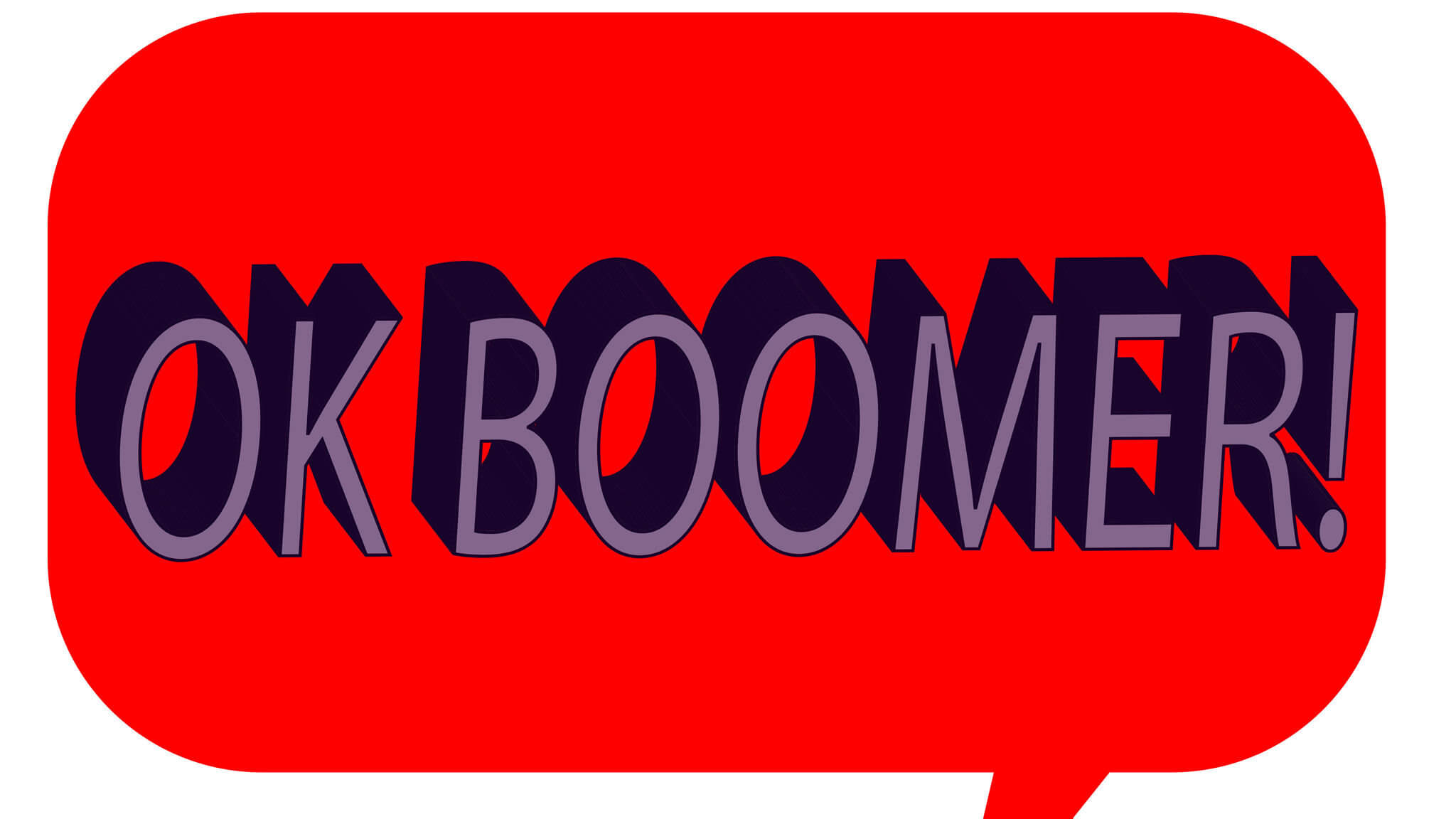
In recent weeks the phrase “OK, Boomer!” has entered the lexicon to an extent and diffusion rare even in an age as beholden to memes as our own. The exclamative expression (usually appended to an image or gif) is used to dismiss the opinion of an elder interlocutor in online forums and social media feeds. The dismissal only reinforces the accusation that the recipient is rigid, cranky, and out of touch. As such, it is effectively used both by millennials and zoomers online as a mode of silencing critiques from elder generations. To some this may seem like a form of karma after years of millennials being dismissed as “snowflakes”—principally by their immediate forebears, Generation X. However, this deepening of generational conflict threatens to alienate generations from one another at a crucial moment, with the U.K. General election and U.S. Presidential nomination campaigns both in full swing. From the point of view of the Left, this could prove damaging, impeding solidarity building between generations online—and on the campaign trail. Overcoming divisions may require a consideration of the Left’s roots in historical materialism and an acknowledgment that beyond generational traits, people of all ages on the Left share common ground.
Before doing so, it may be useful to visit the complex issue of generation itself, given that, as with social class or gender, there are no fixed boundaries for generations. The earliest birth year for millennials varies between 1978 and 1982, with the latest varying between 1996 and 2004. Right-wing political theorists William Strauss and Neil Howe give the following dates for post-war generations: Baby Boom Generation (1943–1960); Generation X (1961–1981); Millennial Generation (1982–2004). However, Harvard’s Joint Center for Housing Studies defines millennials as being born from 1985–2004, while Bloomberg News recently argued that the goal posts move so often that we ought to forget the divisive notion of generation altogether. With such a slippage, it is at this point unclear where the most recent generation starts—or even what it is called—though “zoomer” will be the term used here, with 1997 to 2001 as a crossover point. This means that in recent years, young adults have come to represent a whole new generation looking to prove itself—and providing a new set of traits for their elders to disdain. And herein resides, I’d argue, one reason for heightened tensions—namely, a generation even more technologically absorbed and savvy than the millennial is ready to step up and assert themselves online, to sling mud, and to have mud stuck to them.
Though, to focus on the current round of mud slinging, one principal motivation for the spread of the term “OK, Boomer!” is the belief of millennials and zoomers that the Baby Boomer Generation trashed both the environment and economy. Yet this represents an ahistorical approach that casts the Baby Boomer generation as the master rather than object of material conditions.
This is a battle that could play out for years, only to be replaced by a clash between a subsequent generation and their elders. Though, to focus on the current round of mud slinging, one principal motivation for the spread of the term “OK, Boomer!” is the belief of millennials and zoomers that the Baby Boomer Generation trashed both the environment and economy. Yet this represents an ahistorical approach that casts the Baby Boomer generation as the master rather than object of material conditions. Indeed, the implied notion that millennials would have behaved differently if they had been born between 1946 and 1965—the dates commonly given for the Baby Boomer Generation—reinforces the very idea of exceptionalism that, along with their alleged sensitivity, has earned members of the millennial generation the nickname snowflakes. Leaving aside name-calling for now, the Left needs to develop an appreciation of a relationship to material forces that is shared across generations and which can only be shaped in solidarity among them.
The rest is for members.
All proceeds go toward publishing more writers and poets.
Free for 30 days, then $3 a month
Become a member
This work is preserved in Merion West’s archive of articles and poems published from 2016 through early 2025. Explore the archive