
From the archive
Immanuel Kant: a Conservative Philosopher as Much as a Liberal One

“This suggests that Kant’s Copernican turn in metaphysics, in both the theoretical and practical spheres, has the potential to be interpreted in both liberal and conservative directions.”
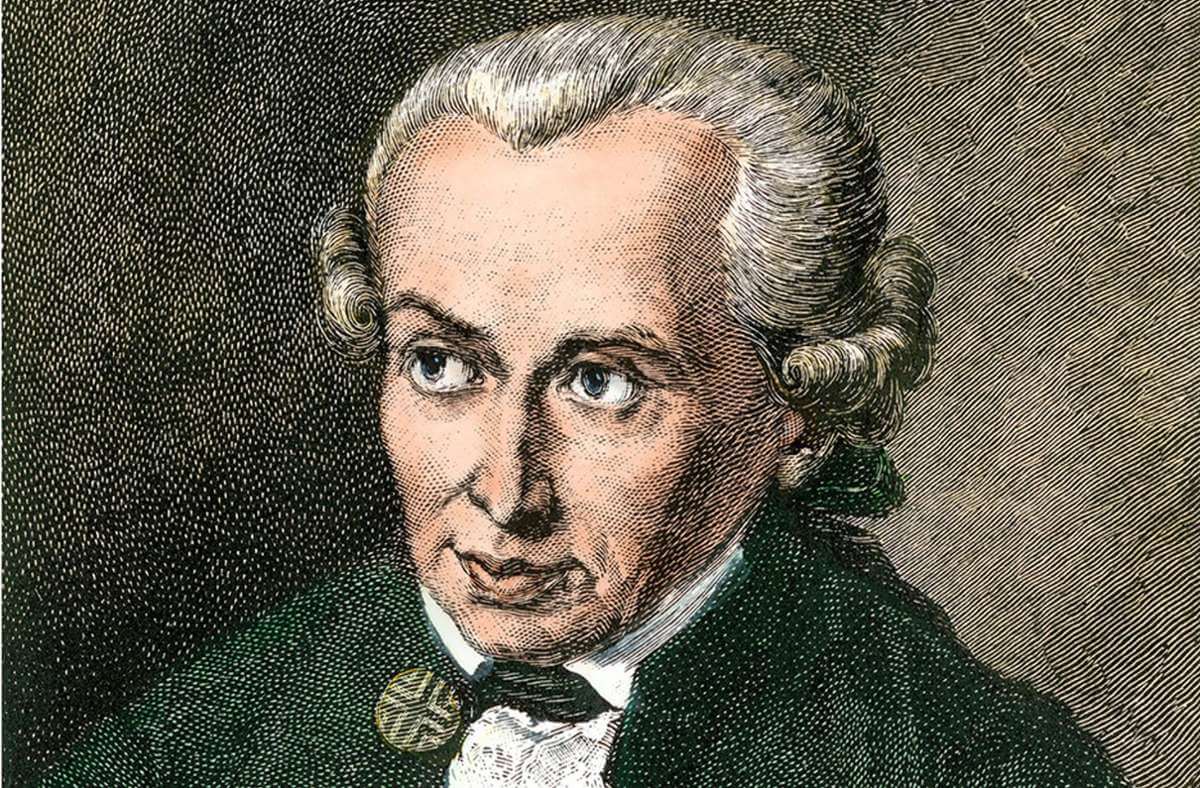
“This suggests that Kant’s Copernican turn in metaphysics, in both the theoretical and practical spheres, has the potential to be interpreted in both liberal and conservative directions.”
In a recent piece, Matt McManus called Immanuel Kant “the greatest liberal thinker.” McManus argued for Kant’s liberalism by highlighting two main metaphysical commitments: an overt commitment to a “modern scientific outlook grounded in the universal structure of the human mind” and his criticisms of conventional metaphysics that “have a strong anti-reactionary edge.” In this piece, I hope to point out some ways in which—contrary to both McManus and conservative Kant-detractors—Kant is compatible with a kind of moderate conservatism. This is not to say that Kantian innovation has not inspired liberal thinkers. The claim is only that Kant’s system turns out equally to support a kind of conservatism.
Before I address this, there is an initial worry about calling Kant “the greatest liberal thinker.” Kant was unapologetically sexist, and he argued for a racial hierarchy for at least the first part of his life. McManus puts this to the side at the beginning of his article, so I will not focus on it here. However, two things should be noted. First, it is not clear that Kant’s views on race and sex can be so cleanly separated from his most abstract, philosophical claims. Indeed, as Charles Mills has argued, Kant’s constant invocation of “humanity [Mensch]” should be eyed with skepticism. Indeed, Kant seems to think that the only persons capable of making full judgments—moral and theoretical—are white men. Second, when choosing the “greatest liberal thinker,” we have to consider that there were others just as committed to innate equality and rationality as Kant. One example is John Stuart Mill, who also openly opposed—against the trend of the time—excluding minority groups from his universalist claims.
Did Kant’s Contemporaries Think He Was a Liberal?
I find it important to start with whether Kant was considered liberal in his own day. While he was living, he was rightly seen as one of the most important philosophers alive. After the publication of his first edition of Critique of Pure Reason in 1781 and his moral philosophy in Groundwork for the Metaphysics of Morals in 1785, and Critique of Practical Reason in 1788, Kantian philosophy was established as a distinct and powerful school of thought in Prussia. However, despite his work on morality, Kant did not publish explicitly on a system of rights and politics until 1793. In this time, his followers in Prussia, in the wake of the French Revolution, had begun to develop their own ideas about what a Kantian system of politics would look like. As Reidar Maliks has shown extensively in his 2014 book Kant’s Politics in Context, Kant’s contemporaries attempted to develop his philosophy both in a leftist (through making politics a means to the achievement of moral autonomy (i.e. Fichte, Erhard)) and conservative manner (i.e. Rehberg, Von Gentz). Left-Kantians wanted to develop politics in line with Kant’s early What is Enlightenment essay, where politics was seen as a means to achieve the desirable end of moral autonomy. Thus, political society should be structured in order to bring about the greatest amount of individual autonomy. The Right-Kantians, on the other hand, who were generally critics of the French Revolution, wanted to develop Kant’s a priori metaphysics to insist that politics had to be filled in with historical judgments from tradition.
The rest is for members.
All proceeds go toward publishing more writers and poets.
Free for 30 days, then $3 a month
Become a member
This work is preserved in Merion West’s archive of articles and poems published from 2016 through early 2025. Explore the archive