
From the archive
Writing in the Tradition of Rawls—to Understand Trump

“McManus…is much closer to the analytic tradition represented by authors such as John Rawls and Martha Nussbaum. Yet, his work is much richer thanks to his engagement with Marxist class analysis and post-structuralist philosophy…”
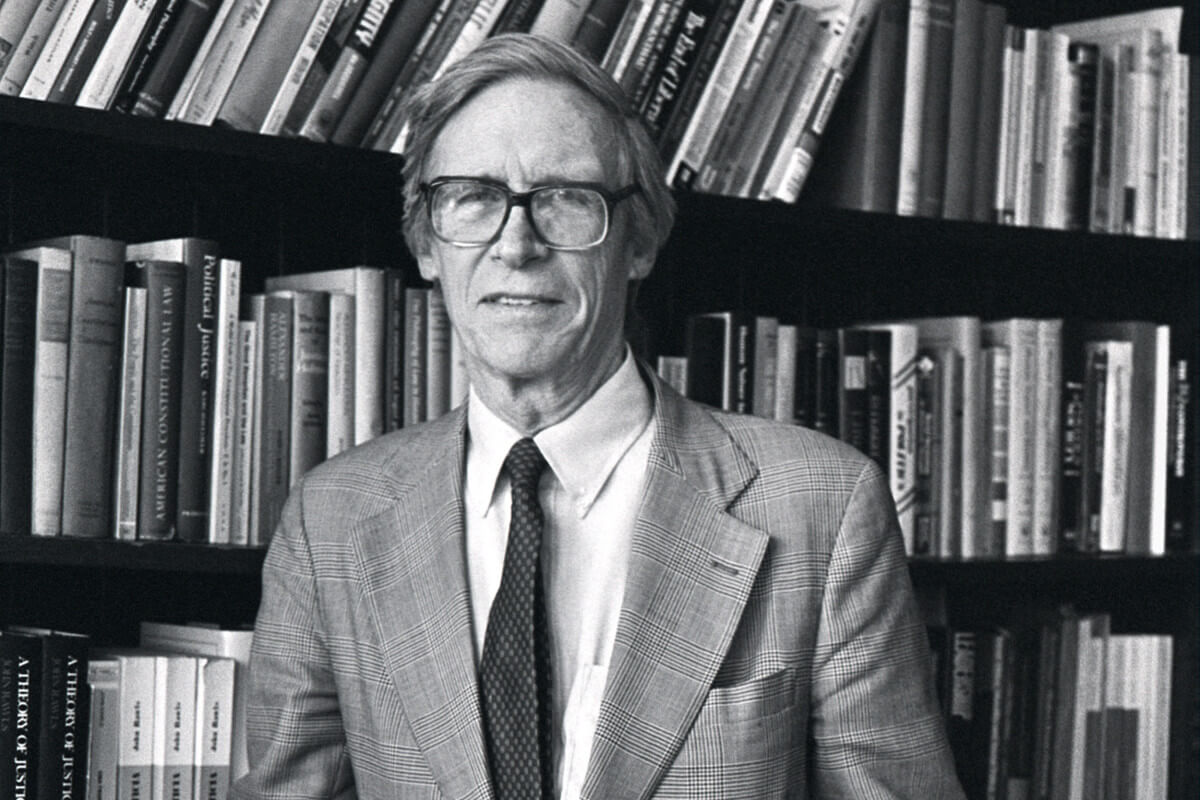
“McManus…is much closer to the analytic tradition represented by authors such as John Rawls and Martha Nussbaum. Yet, his work is much richer thanks to his engagement with Marxist class analysis and post-structuralist philosophy…”
When Matt McManus asked me to review his new book The Rise of Post-Modern Conservatism: Neoliberalism, Post-Modern Culture, and Reactionary Politics, I immediately accepted. One of my first thoughts was that I had just saved 800 pesos ($40 U.S.) because I had been looking forward to reading it, long before being asked to review it. The topic of post-modern conservatism is something I’ve been interested in now for several years. This subject caused me to write my first published piece, which was on the rise of right-wing identity politics, for the Mexican magazine Nexos. Now, many thinkers have written aptly about post-modern conservatism for the better part of the last two decades—and written about related phenomena for almost the entire twentieth century. McManus rightfully draws, in part, from their work. What I think is his greatest contribution, however, is his ability to tie insights coming from different disciplines and schools, some of which—at first glance—seem unrelated, into one coherent narrative.
The Rise of Postmodern Conservatism offers an extensive and analytical literature review, which covers a wide array of works, which are not necessarily related—from Mark Fisher’s analysis of culture under neoliberal capitalism in Capitalist Realism to Wendy Brown’s critique of the politics of identity to Nietzsche’s views about meaning to Neil Postman’s analysis of media. The relationship between these factors and the emergence of populist conservatives (and far-right politicians and intellectuals) has been explored before. But McManus identifies the ways in which each of these factors interacted and synergized with one other throughout the twentieth century. In conjunction with certain strands of conservative thought, these conditions eventually gave rise to post-modern conservatism.
McManus’s book is divided into five parts. The first part explores post-modernism in its different acceptations: as a philosophical current—and as a cultural phenomenon. He then explores the interplay between both of these manifestations of post-modernism. As McManus documents, both post-modern philosophy and culture are characterized by skepticism and a type of ironic distance—that is, an attitude that downplays issues and even disengages the subject from the central tenets of modernity, such as scientific truth and the idea of progress. The aim of the first two chapters of the book, which comprise the first section, is to dispel misconceptions and exaggerated claims about the impact of post-modern philosophy, as well as to introduce the concept of post-modern culture, which will set the stage for the rest of the book. The real impact of post-modernism—and what the relevant acceptation is for the rest of the book—is the latter.
The rest is for members.
All proceeds go toward publishing more writers and poets.
Free for 30 days, then $3 a month
Become a member
This work is preserved in Merion West’s archive of articles and poems published from 2016 through early 2025. Explore the archive