
Why We Have Banned Social Media for Our Child

As debates swirl in legislatures around the world about restricting children's social media use, senior editor Jonathan Church offers his own experience raising a daughter while limiting screens.

In December of last year, Australia became the first nation in the world to ban social media for children under the age of sixteen, and, in the time since, numerous other countries are considering doing the same. (Around the same time that the Australian policy went into effect, Florida was permitted by an appeals court to begin enforcing its ban on children under the age of fourteen from having social media accounts.) Reactions to these proposals have varied widely, inviting questions about the perennial tension between liberty and safety, the disconnect between private sector incentive structures and the well-being of young people, and several other trade-offs.

The debate over government-ordained bans obscures, at times, a simpler truth: Parents already possess the authority—and the responsibility—to impose limits on technology regardless of what happens in legislative chambers. As confirmed by many research findings, young people are better served to have technology in very limited doses.
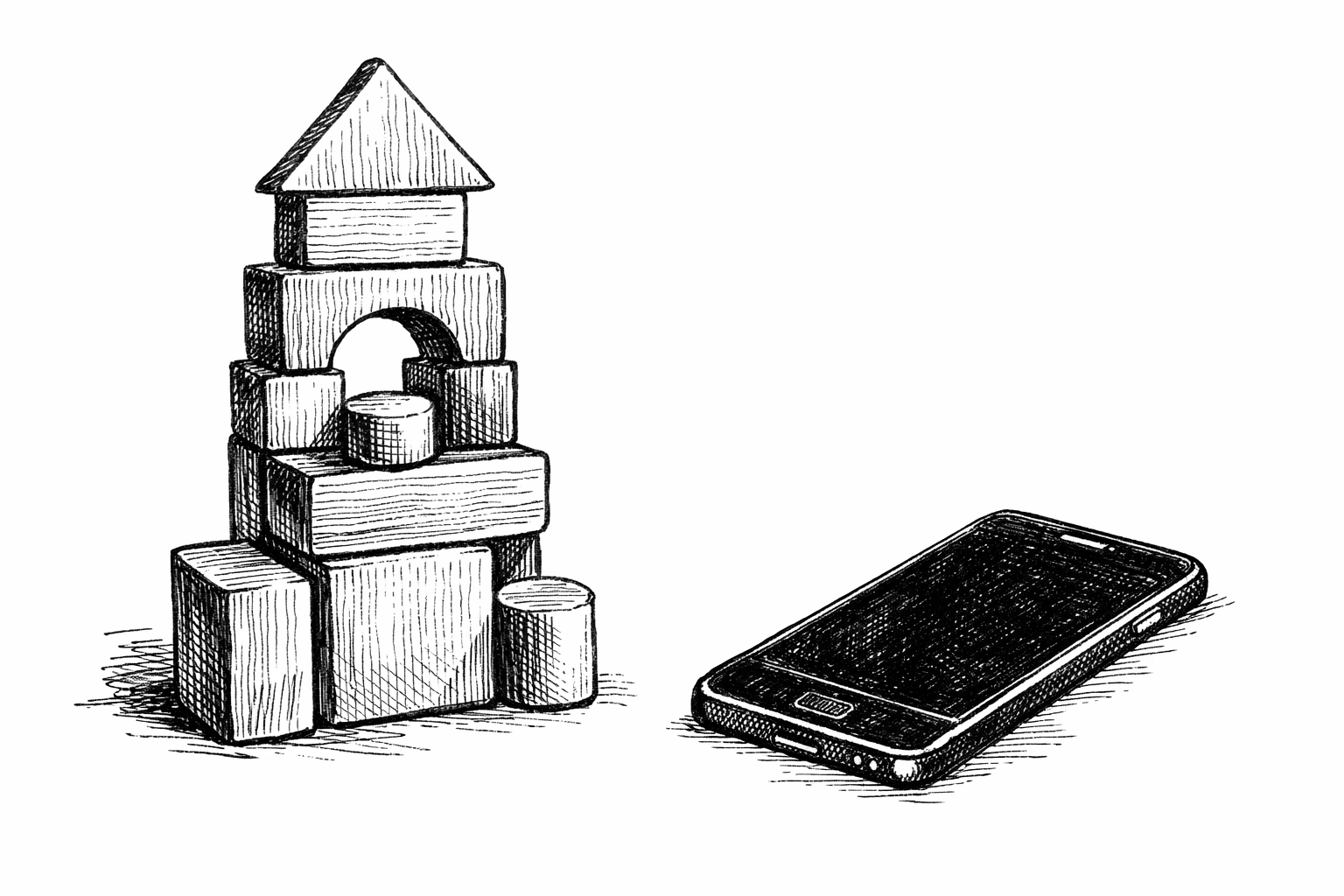
Almost from the day my daughter was born, her mother and I agreed that we would minimize our daughter’s exposure to screen time, with a near-total blackout for the first two years. For us, “screen time” was an inclusive term. It meant no phones, iPads, or television screens. But we are not fundamentalists, either. We decided there was nothing wrong with allowing her to watch Disney or Sesame Street on occasion because, well, kids are kids.

As our daughter grew into a toddler, we recognized that screens are omnipresent in society and that they can, in fact, be useful. For example, as a homeschooled child, our daughter regularly uses IXL on an iPad as part of her learning regimen. She also uses applications such as Duolingo to learn Spanish and play chess. She watches shows like Bluey and has seen many movies—from Christmas classics like The Grinch, Home Alone, and Elf to conventional films like Honey I Shrunk the Kids and E.T. Occasionally, I even allow her to play games like Township on my phone. She also earned a certificate in “AI for kids” at one of her Girl Scout events.

To be sure, her life is not entirely devoid of screens and technology.

Crucially, however, she has never spent a second on social media. We do not plan on allowing her to have her own phone until she reaches the age of eighteen. Since at least one of her parents is always with her for softball practices and games, cheerleading events, and Girl Scout activities, she does not have opportunities to squirrel away in hiding with a friend who possesses a phone (and, say, an Instagram account). Admittedly, this could easily change in her teenage years. Perhaps phone ownership will become necessary before age eighteen. But we take seriously the dangers of unrestricted and unsupervised exposure to social media for children whose brains, personalities, and emotional health are still developing and remain acutely vulnerable to manipulation by bad actors.

My daughter is nine years old, a tender age accompanied by a long and uncertain future. One can never be sure what twists and turns the life of a child will take, and as Otto Frank said after reading his daughter Anne Frank’s diary, “most parents don’t know, really, their children.” Indeed, I often wonder what inaccessible secrets are brewing in my daughter’s mind even if she has yet to acquire the skill or maturity to articulate them. How she will respond to her parents’ decisions as her life unfolds remains to be determined.

What I do know, however, is that she recently finished reading the seven books in the Harry Potter series, and now she is eager to begin reading The Lord of the Rings trilogy. When she expressed a keen interest in the origins of the universe, I purchased for her a copy of Stephen Hawking’s A Brief History of Time. I also know that I currently read chunks of The Iliad at night, helping her to comprehend the nuances of ancient Greek mythology as I translate the highfalutin Homeric poetry, and she listens attentively and looks forward to the next time we will read together. As testified both by my own observations and report cards from school, she loves to read.

In addition to having an aptitude for mathematics, she also enjoys spontaneous creative activities such as painting and drawing. She makes friends easily and is actively engaged in softball, cheerleading, and Girl Scouts. In short, my daughter is doing just fine without an iPhone.

Needless to say, there are many other reasons besides the absence of screen time that have helped her to thrive, such as a stable and loving home. But the limits we placed on her technology use have undoubtedly shielded her from harm, both known and unknown. As exemplified by Steve Jobs himself, this is the same thing many technology executives do with their own children.

Fortunately, many states are considering ways to shield children from the excesses of technology. But in the meantime, parents can still set the tone at home.

Jonathan Church is a senior editor at Merion West
