
From the archive
The Enduring Question at the Heart of Gone with the Wind
Sadhika Pant revisits the 1936 Pulitzer Prize-winning novel, a book recently targeted for cancellation by certain activists. Pant suggests that Scarlett O’Hara and Ashley Wilkes represent two dueling approaches to living, and this dichotomy invites nothing short of civilizational questions.
Margaret Mitchell’s 1936 novel Gone with the Wind is many things: a sweeping historical romance, a portrait of the American South that many consider controversial, and a narrative often entangled in debates about nostalgia, race, and ideology. These conversations, though important, have often obscured a subtler philosophical current. For all its romance and war-drum thunder, the novel remembers something many of us would rather forget: That surviving is not the same as living, and living is not always a virtue when the corn will not grow.
This largely overlooked theme—articulated most powerfully through the contrasting figures of Scarlett O’Hara and Ashley Wilkes—speaks not only to the nature of personal virtue but also to broader civilizational questions. In particular, it maps onto a recurring dichotomy in modern discourse: the divide between science and art, between problem-solving and meaning-making.
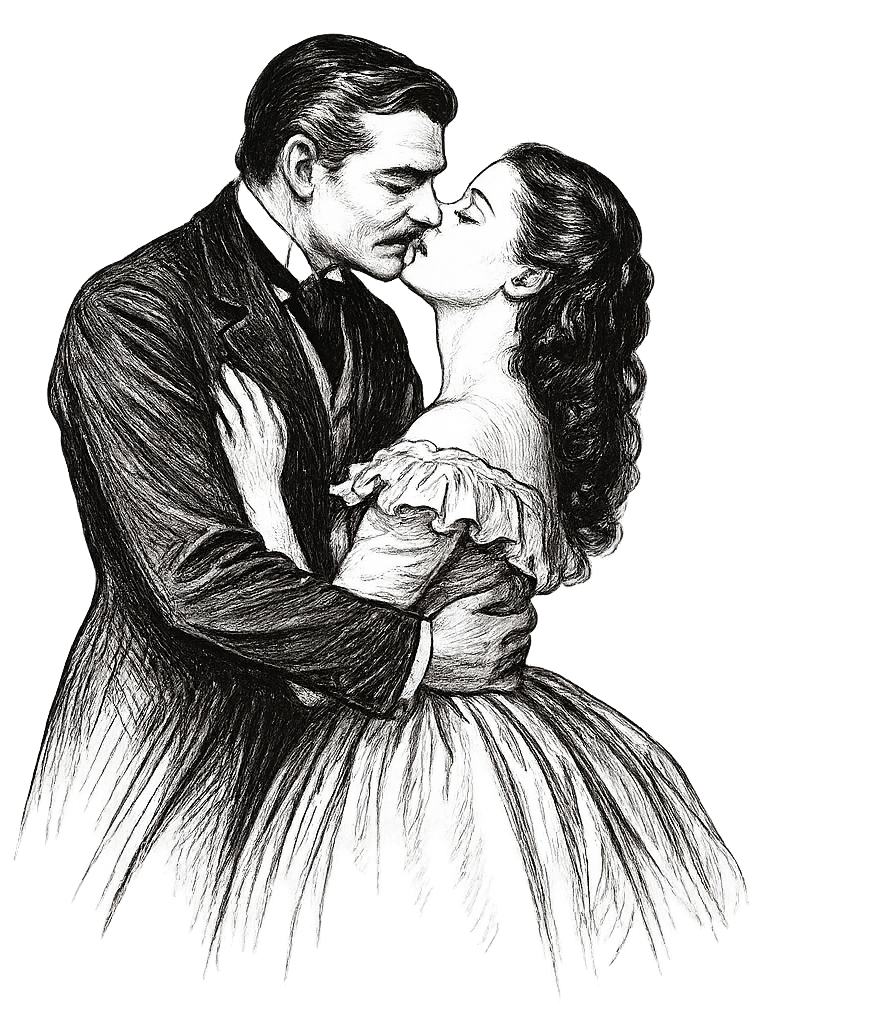
At its core, Gone with the Wind presents two visions of virtue. Scarlett O’Hara gets called many things—some not fit to print—but she survives. She claws and scrapes and breaks where she has to, and when the war swallows up all the lace and laughter of her world, she puts on boots and goes to work. There is a kind of holiness in that. It is not pretty, not refined. But it keeps the stove warm.
And then there is Ashley Wilkes, full of poetry and sighs. He belongs to the world that used to be—the one with music after dinner and hands that never knew what a plow felt like. He walks through the ashes of the old world carrying a book of verses and no map for the new one. He is hopelessly ill-equipped for the post-war South but remains tethered to a disappearing sense of gentility. The central tragedy of the novel is not the fall of the Confederacy but, instead, the realization that survival and beauty, when divorced from one another, become mutually impoverished.
The rest is for members.
All proceeds go toward publishing more writers and poets.
Free for 30 days, then $3 a month
Become a member