
From the archive
Why the Left Should Take Hayek Seriously, Too

“As a student pointed out during a lecture on this subject, this Hayekian market is probably closer to the Open Source movement in software development than to what is commonly invoked with the words ‘free market.’”
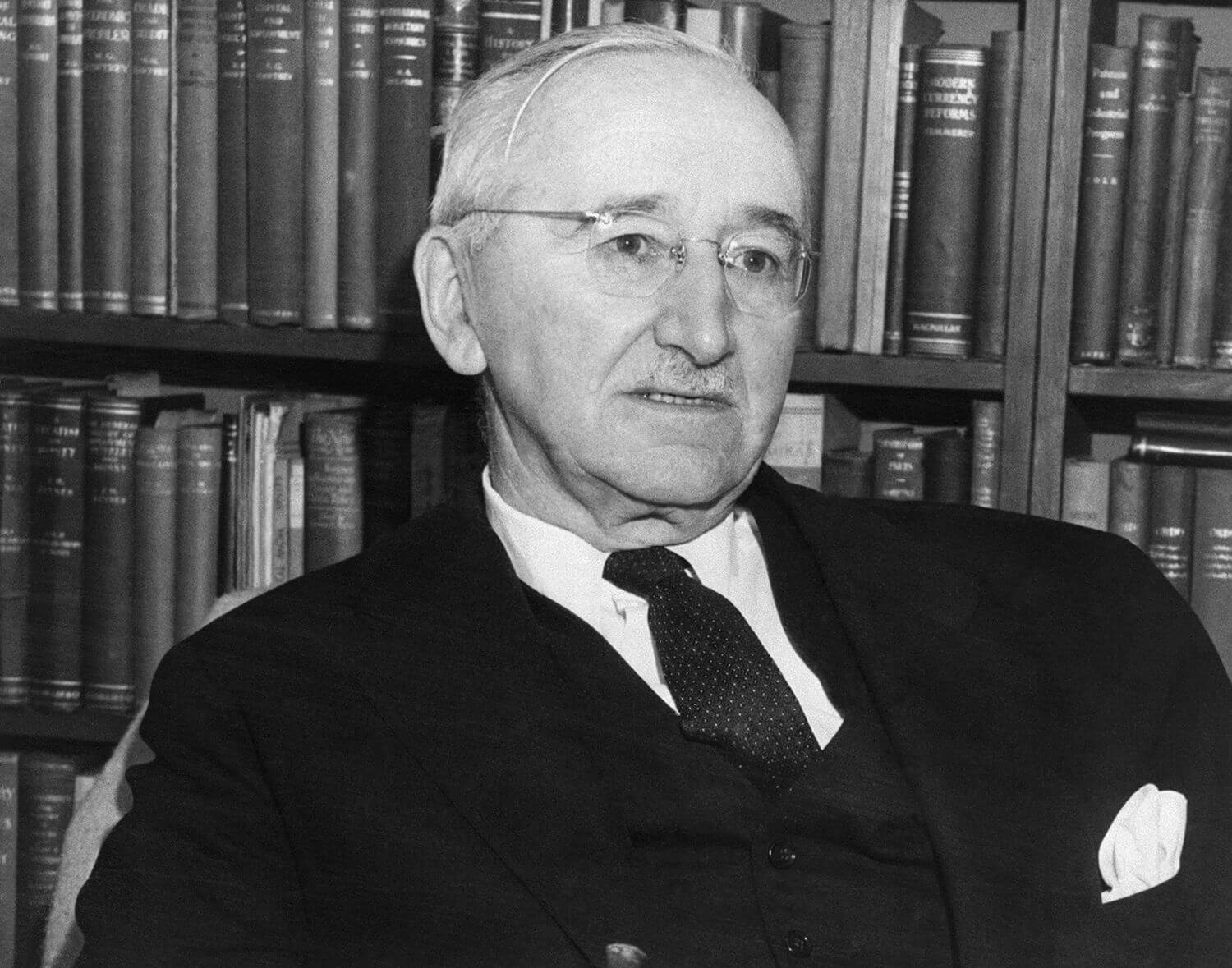
“As a student pointed out during a lecture on this subject, this Hayekian market is probably closer to the Open Source movement in software development than to what is commonly invoked with the words ‘free market.'”
The Austrian School of Economics makes for an interesting case in the history of thought. While pro-free market thinking was certainly dominant for a good portion of the 20th century (and essentially all of the 21st century thus far), the Austrian School has always been more on the fringe of economic thought, than part of the mainstream. During the first decades of the 20th century, the dominant paradigm was neoclassical economics as espoused by 19th century economists such as Alfred Marshall. As of late, neoclassical economics has been influenced by the Monetary Theory coming out of the Chicago School, represented by the likes of Milton Friedman and Gary Becker. While there may be some superficial similarities between Austrians and Monetarists, such as their commitment to the free market, both sides arrive at their conclusions for very different reasons, and there are substantial philosophical differences between the two. Now, both camps are firmly on the Right of the political spectrum—at least when it comes to economic matters. However, the unorthodox nature of the Austrian School (and Friedrich Hayek) makes both the Austrian School and Hayek important subjects for consideration, including for those of us who are left of center.
Hayek’s economic theory (and his political philosophy more broadly) are both derived from a more fundamental source: his theory of knowledge. It is impossible to understand Hayek’s commitment to liberty and the free market (and, importantly, why they are different from the more mainstream neoliberal and neoclassical approaches) without understanding his theory of knowledge. But it is also this theory of knowledge that opens up the possibility for what I see as left-leaning interpretations of his work. Before continuing, I should acknowledge that I am fully aware that my interpretation would surely be rejected by Hayek himself. My goal is, therefore, not to argue that my interpretation is what he actually meant in his work. In that sense, what I write here could even be read as a negation of some of his conclusions, though one that stems from his own premises and lines of reasoning. Finally, I am fully aware of Hayek’s later views on, for example, Augusto Pinochet’s dictatorship in Chile. These are completely unacceptable from a left-wing point of view and, frankly, from any pro-democratic and pro-individual-rights point of view. However, my claims here are only meant to apply to the specific aspects of Hayek’s thought that I will discuss here, namely, his theory of knowledge. This was originally laid out in his 1945 paper “The Use of Knowledge in Society,” and later given a more political and ethical bent in the second chapter of his 1960 book The Constitution of Liberty, “The Creative Powers of a Free Civilization.” These were published several years before the advent of neoliberalism and the Chilean military coup that removed Salvador Allende. I think that—when one analyzes these works closely—there is no reason to assume that support for the Chilean dictatorship was the inevitable conclusion, and, in fact, I think there are good reasons to conclude the opposite.
Hayek is often classified as one of the ideological fathers of neoliberalism, though I believe this is incorrect. As I said before, there are understandable reasons for this, even though what we now consider to be ‘neoliberalism’ differs from Hayek’s own philosophy. It is important to say a few words on why, which, of course, necessitates discussing what exactly is meant by “neoliberalism.” The word itself is much older than the set of policies it has come to describe. It originally came from the Mont Pelerin Society, of which Hayek was a founder. It was, then, used with a positive connotation because it was meant to describe a revival of the ideals of classical liberalism. However, since the 1980’s, it has come to refer to a very specific set of policies and reforms. In The Handbook of Neoliberalism, Springer, Birch, and MacLeavy state that, “[m]ost scholars tend to agree that neoliberalism is broadly defined as the extension of competitive markets into all areas of life, including the economy, politics and society.” More particularly, in Latin America where the term came to acquire its negative connotations, it refers to the set of policies also known as the Washington Consensus. In a 2002 policy paper titled “What Washington Means by Policy Reform,” economist John Williamson explains in some detail what these policies are. Even a quick look at the paper reveals that—rather than some broad philosophical ideal—the Washington Consensus is about technical aspects of policy-making. Williamson even uses the term “technocrat” positively. These include things like following certain monetary policies, the reduction (or elimination) of deficit spending, and putting forward moderate interest rates.
The rest is for members.
All proceeds go toward publishing more writers and poets.
Free for 30 days, then $3 a month
Become a member
This work is preserved in Merion West’s archive of articles and poems published from 2016 through early 2025. Explore the archive