
From the archive
Killing of Soleimani Presents Opportunities, Not Just Challenges

“…it can be argued that the challenges emanating from this sequence of events have the potential to be turned into golden opportunities to clip the Islamic regime’s wings in the Middle East and beyond.”
“…it can be argued that the challenges emanating from this sequence of events have the potential to be turned into golden opportunities to clip the Islamic regime’s wings in the Middle East and beyond.”
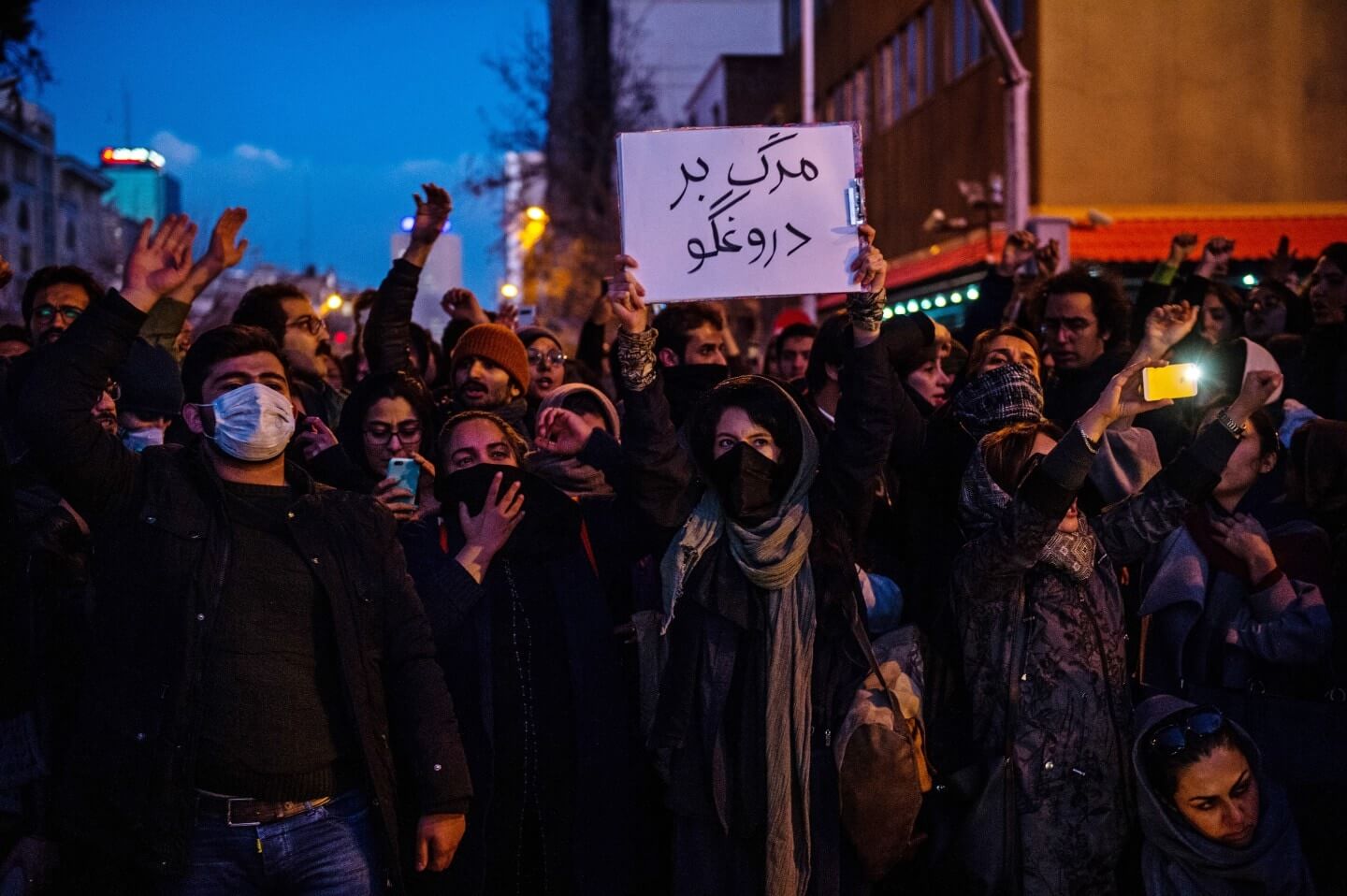
The United States’ spectacular and audacious January 3rd drone attack on Qasem Soleimani, the commander of the Quds Force (the elite wing of Iran’s Islamic Revolutionary Guard), followed by Iran’s cautious, measured retaliatory missile strike on U.S. bases in Iraq without human casualties, and then the shooting down of a Ukrainian commercial airliner by the Iranian air defense system have all been interpreted by many analysts and political commentators as a dangerous escalation of hostility between the United States and Iran. Contrary, however, to doomsday scenarios deployed by Democrats and aligned pundits on networks such as CNN and MSNBC, it can be argued that the challenges emanating from this sequence of events have the potential actually to be turned into golden opportunities to clip the Islamic regime’s wings in the Middle East and beyond.
As the head of the Quds Force and the architect of the Islamic regime’s regional security strategy, Qasem Soleimani was instrumental in masterminding sectarian division designed to create a Shiite crescent across the Middle East. Through mobilizing and organizing Shiite militias in Middle Eastern countries (particularly Iraq, Syria, Lebanon, and Yemen) Soleimani oversaw the slaughter of many Syrian, Iraqi, and American soldiers. His demise, however, has been excoriated by Democrats in the United States. Former Vice President Joe Biden has even gone further by suggesting that by killing Qasem Soleimani, President Trump has: “tossed a stick of dynamite into a tinderbox.”
Contrary to Democrats’ boisterous condemnations of the elimination of Qasem Soleimani and his henchmen (which they have deplored as a dangerous and reckless undertaking that would expose U.S. interests to attacks by the Islamic regime and its proxies in the region), it can, instead, be argued that the extermination of Soleimani has, in fact, established a strong deterrence against attacks on the lives of Americans either by the Islamic regime or its proxies. This line of reasoning can be corroborated by two major developments following the drone strike. First, despite bellicose statements of condemnation and threats from Iranian officials to unleash decisive retaliations against U.S. bases in the region, the Islamic regime’s cautious and somehow measured missile response indicates the regime’s realization of the potential consequences of killing Americans. This explains why Iran eschewed inflicting human casualties on U.S. forces in their response to the Soleimani strike. The Iranian leadership has come to the painful realization that the Trump administration will not tolerate the loss of American lives. Had any Americans been killed, the United States would likely have responded with devastating military force, the sort of force that might, very well, have threatened the very survival of the Iranian regime.
The rest is for members.
All proceeds go toward publishing more writers and poets.
Free for 30 days, then $3 a month
Become a member
This work is preserved in Merion West’s archive of articles and poems published from 2016 through early 2025. Explore the archive