
From the archive
How Democrats Can Win Back Cuban and Venezuelan Voters

“For those accustomed to political polarization, it is easy to transition into this hyper-polarized political climate in the United States and readily pick a side.”
“For those accustomed to political polarization, it is easy to transition into this hyper-polarized political climate in the United States and readily pick a side.”
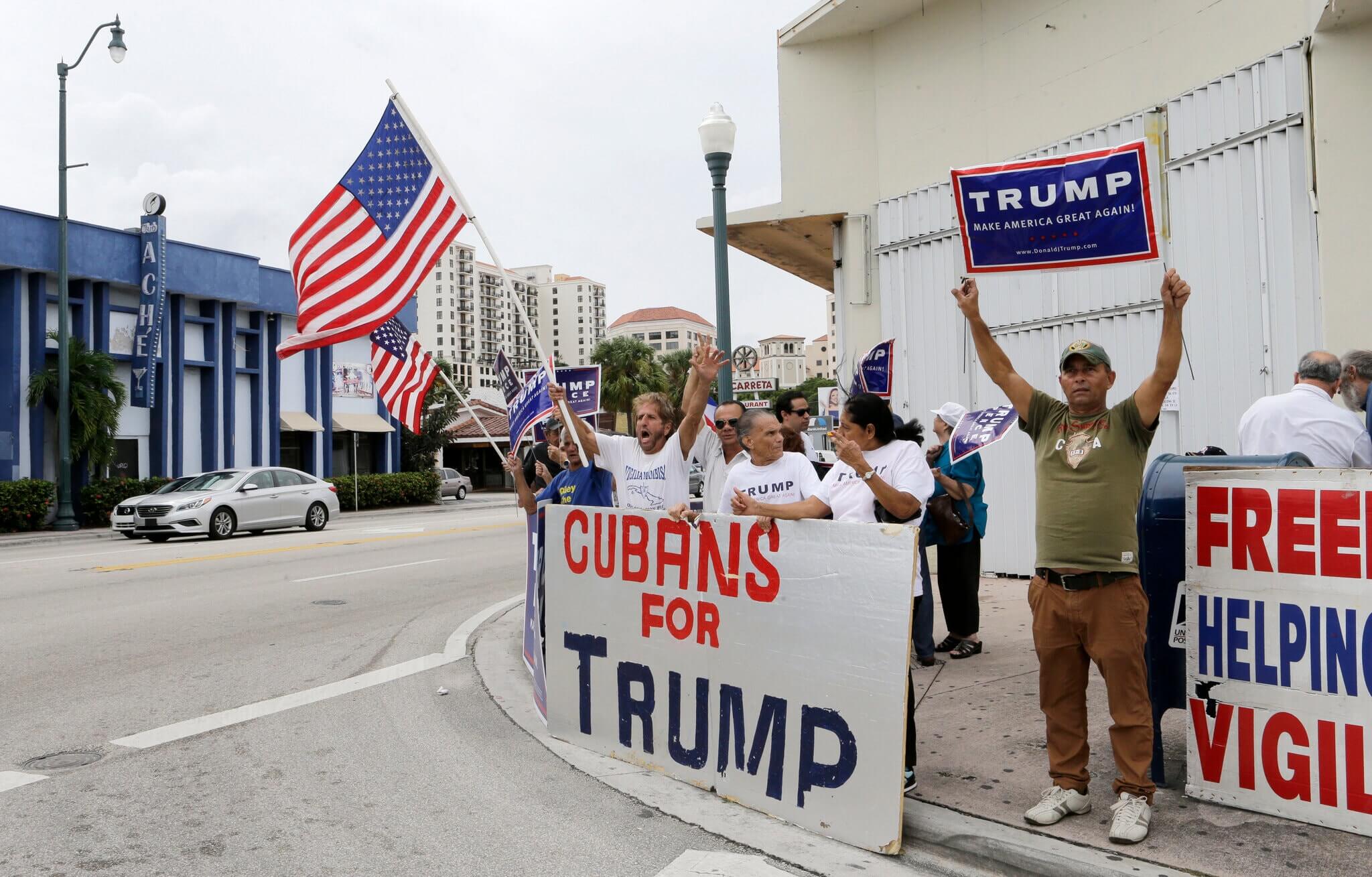
One of the biggest surprises in the 2020 presidential election was the dramatic red shift of Miami-Dade County, Florida. President-elect Joe Biden received just over 600,000 votes, about the same number earned by former Secretary of State Hillary Clinton in 2016. President Donald Trump, however, went from 333,000 votes four years ago to approximately 530,000 this year—a net gain of around 200,000 votes. This significant increase stems from an aggressive Republican push to capture Cuban and Venezuelan voters in the county, an effort that has proven quite successful.
For the most part, Cubans and Venezuelans are particularly reactive to charges of communism, socialism, or anything that offers even a whiff of left-wing ideology. Having come from socialist, autocratic nations, it is natural to expect such resistance. Over time, rejecting socialism has become something of a crusade for those hailing from these countries. As such, accusations that President-elect Biden is a closet socialist (or is in cahoots with left-wing regimes in China, Cuba, or Venezuela) have caused many of these voters to get behind President Trump.
Part of this is a matter of optics. While President-elect Biden is clearly not a socialist and the Obama administration introduced sanctions against Venezuelan officials long before President Trump entered office, President Barack Obama’s positive overtures towards Cuba and the progressive agenda coming from many in the Democratic Party have spooked Cubans and Venezuelans from voting for Democrats. Migratory benefits, such as the Biden proposal for granting incoming Venezuelans Temporary Protected Status (TPS) in the United States, sheltering them from deportation, and offering access to lawful employment in the country are not strong enough to overcome the growing ideological bent towards Republicans. The dramatic political polarization experienced in these countries is another factor influencing these groups: Venezuela has suffered from irreconcilable polarization since Hugo Chávez took power in 1998, while Cuba has had a single-party regime since 1959. For those accustomed to political polarization, it is easy to transition into this hyper-polarized political climate in the United States and readily pick a side.
The rest is for members.
All proceeds go toward publishing more writers and poets.
Free for 30 days, then $3 a month
Become a member
This work is preserved in Merion West’s archive of articles and poems published from 2016 through early 2025. Explore the archive