
From the archive
Before the March for Life, a Word to the Wise

“If the legal pro-lifer really wants to reduce the number of abortions, he or she has no choice but to argue for why abortion is wrong, why a culture in which abortion is frowned upon is superior…”
“If the legal pro-lifer really wants to reduce the number of abortions, he or she has no choice but to argue for why abortion is wrong, why a culture in which abortion is frowned upon is superior…”
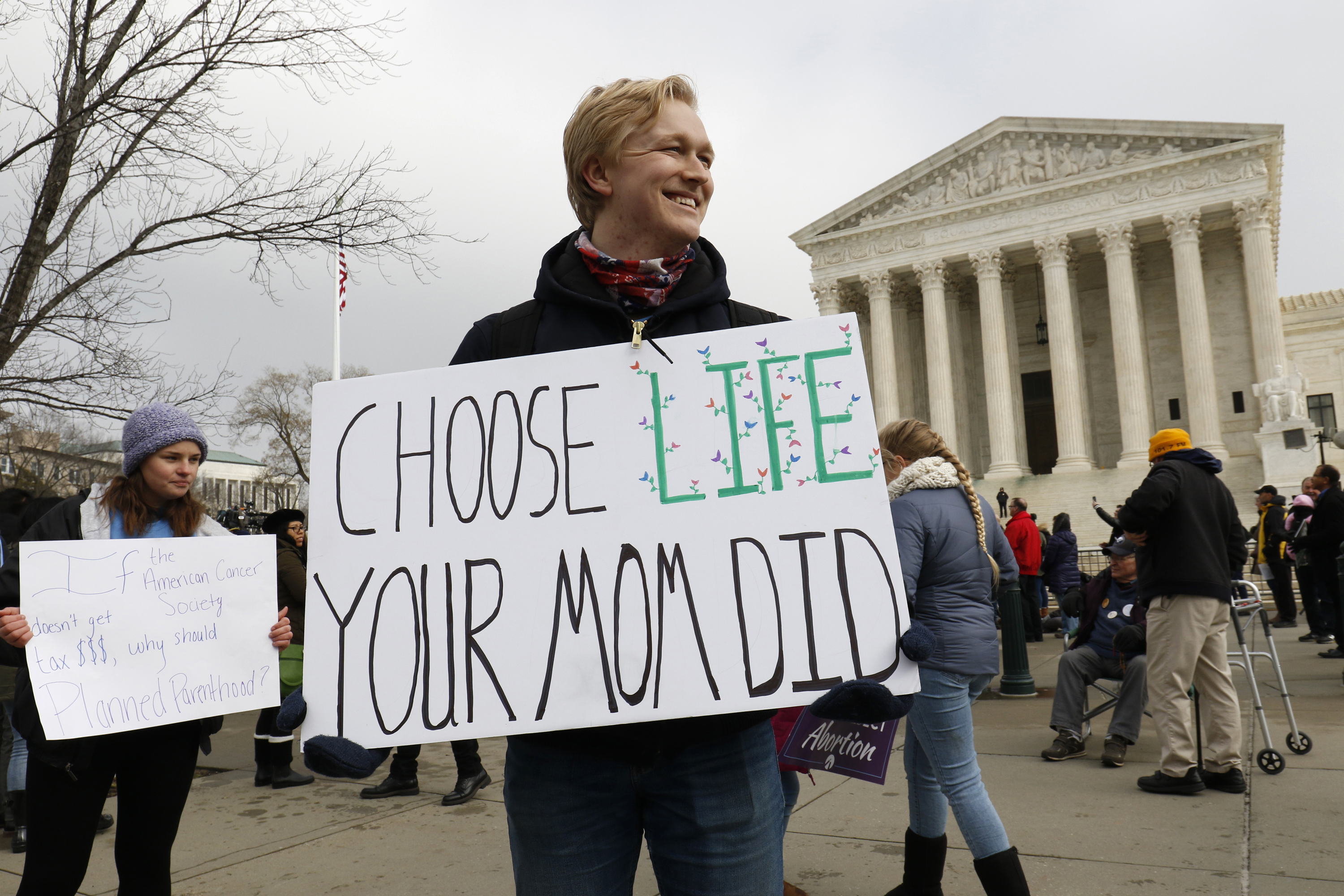
At the upcoming March for Life planned for this coming Friday, pro-life/anti-abortion advocates will be marching across Washington, DC. Their mission is to “end abortion—uniting, educating, and mobilizing, pro-life people in the public square.” The marchers are not only protesting the Supreme Court’s 1973 decision to legalize abortion, but they are also fighting for a culture that regards abortion as immoral. But these two goals are perfectly separable, and sloppily confusing the two has prevented progress on the contentious issue of abortion.
The abortion discussion is mired by a conflation of two concepts: culture and government. The notion that these are distinct was more obvious in past eras. For example, under monarchy, it is quite apparent who are the rulers and who are the ruled. In a monarchic society, the set of values and ideas that people express (i.e. culture) often exists in stark contrast with the oppressive actions of the royal elite. For example, when monarchies went to war with each other, it was often understood that soldiers of one side should only wage violence against those of the other side—civilians were considered off-limits.
Democracy blurs the lines between ruler and ruled, between bottom-up culture and top-down control. Not only do the masses participate by way of voting, but anyone can in principle be elected to office. Language itself has morphed as monarchies gave way to democracies: one speaks of “we” when one is really talking about government officials. Do “we” go to war in the Middle East, or does one group of individuals make that decision and send young men and women to do their bidding? Do “we” raise taxes, or do a handful of people make that decision and impose it on the rest of us? The names of nations are a salient and egregious example. Much has been written recently about a trade war between the U.S. and China—but this is confusing the citizens living in each nation with their respective governments. While it may be the case that the people of each country do wish to wage economic warfare against each other, there is no reason for this to be the case in general, even while governments raise tariffs and the like.
The rest is for members.
All proceeds go toward publishing more writers and poets.
Free for 30 days, then $3 a month
Become a member
This work is preserved in Merion West’s archive of articles and poems published from 2016 through early 2025. Explore the archive