
A New Era in Science? An Interview with NIH Director Dr. Jay Bhattacharya
Once sidelined by the scientific establishment, the former Stanford professor now leads the world’s largest funding body for biomedical research. This month, Dheeraj Baji spoke with Dr. Bhattacharya about his philosophical beliefs and his ambition to spark a new scientific revolution.
As a rookie physician intern thrust into the front line of India's coronavirus (COVID-19) response in a tertiary care hospital, I navigated the chaos of overflowing wards and desperate patients. Like ordinary citizens locked inside of their homes, I also witnessed the heavy toll levied by the pandemic response itself: missed cancer screenings, delayed treatments, and a palpable decline in mental well-being.
To minimize total social harm, the Great Barrington Declaration of October, 2020 suggested that these unintended consequences must be accounted for as part of an evidence-based public health policy. Despite advocating for a protocol that had been standard public health practice for handling respiratory viruses up to that point in history, the letter was condemned by the day's scientific establishment and its dissemination was suppressed by Google, Facebook, and other organs of the media. That letter was my first encounter with Dr. Jay Bhattacharya, one of its three co-authors and a tenured professor at Stanford Medical School at the time.
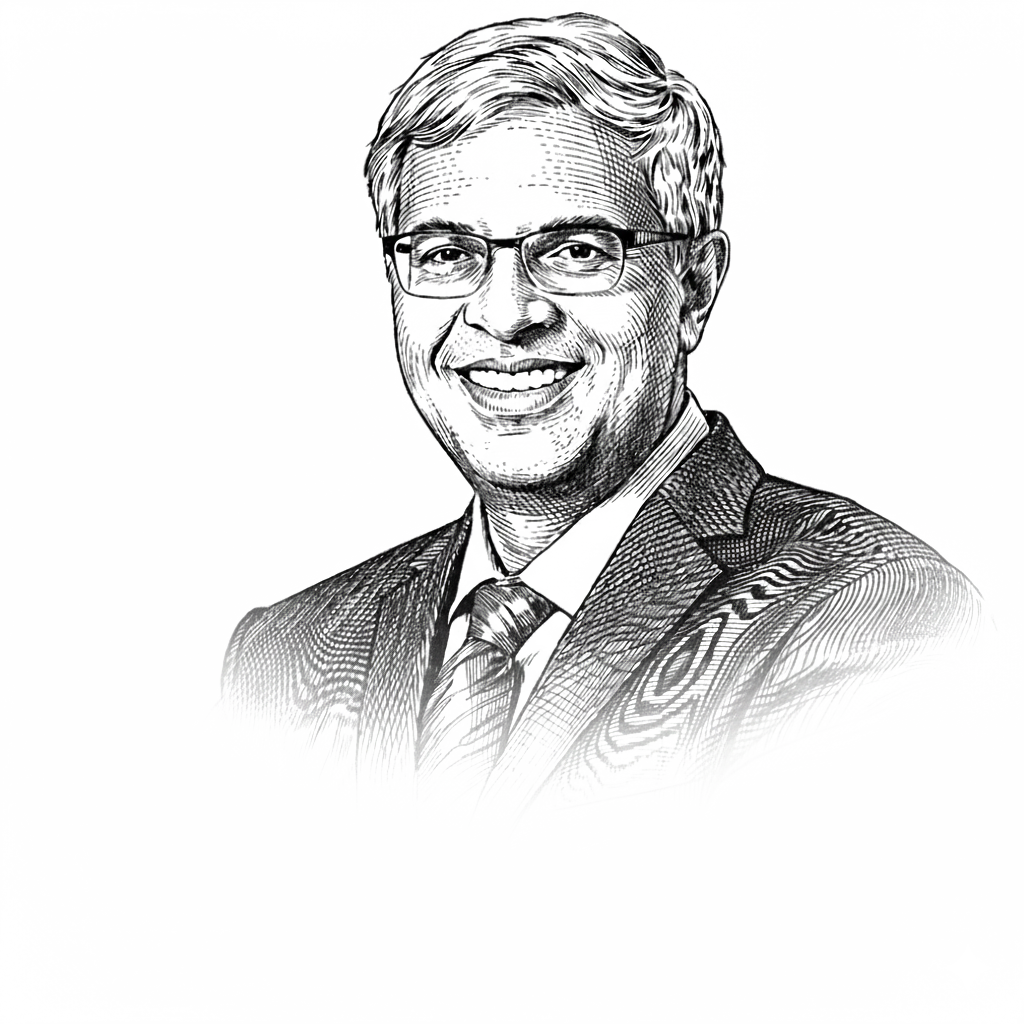
Since then, I have closely followed Dr. Bhattacharya's contributions to scientific discourse, including a riveting 2023 congressional testimony that revealed how political ideology had infiltrated the upper echelons of scientific authority.
The medical and research communities were meant to foster consensus through open debate and examination of the evidence, or so I had been led to believe. Conformity, in other words, had no place among genuine scientists. As a lifelong student of the scientific method and aspiring surgeon, these revelations forced me to ask questions that weighed deeply on my mind: Should I still dedicate myself to medical inquiry if the truth—or an honest pursuit of it—can be so easily suppressed by political forces?
Dr. Bhattacharya's journey from a besieged academic—the target of threats to both his life and livelihood for years following the start of the pandemic—to manning the post previously held by the most powerful man in science, Francis Collins, has pointed me toward an answer.
Yet to Dr. Bhattacharya, his appointment to the directorship of the National Institutes of Health is not to be the climax of the story but, rather, the beginning of a new chapter in biomedical innovation.
In this interview conducted earlier this month, I delved into these themes with Dr. Bhattacharya. We discussed balancing scientific debate with clear public messaging, the replication crisis, and how faith fuels his drive to improve health outcomes for all. His goal is to spark what he calls a "second scientific revolution," by democratizing truth-seeking beyond elite journals and embracing replication over reputation.
In an era when scientific advances incite both hope as well as trepidation, people seek moral clarity from their leaders. Dr. Bhattacharya, for his part, bucks trends here as well. Instead of eschewing spiritual matters, he openly speaks to the Christian motivations behind his vocation. How does that shape his views in practice? His words, spoken onstage at a conference in early 2026, offer a clue: "We are not mere biohazards to one another but made in the image of God."
The interview transcript has been lightly edited for clarity.
What does moral courage in medicine mean to you, at an individual level and an institutional level?
It’s a really interesting question to start with. I think in medicine there’s some safety in saying the same things that everyone else says. You have professional norms in medicine, and most of the time those professional norms are correct. There’s a sort of correct way to treat a patient with a certain kind of heart disease, and you should basically follow that.
At the same time, for much of medicine, there’s deep uncertainty. The reality is that we don’t know how the human body works to the full. We learned a lot over the past many centuries, especially the last century, but there’s a lot that’s not known, and there is an art to medicine.
The problem is that the scientific establishment and the medical establishment often take very strong positions on topics where there is still considerable scientific uncertainty. Moral courage in medicine, from a scientific point of view, means saying that the scientific evidence isn’t solid when the scientific evidence isn’t solid, on a topic where the medical professionals have already taken a stance.
You risk excommunication. You risk losing your license. You risk all kinds of reputational harm. It takes a lot of courage to say, “No, I think what you’re saying is not correct.”
It’s difficult. Medicine, at least modern medicine, is consensus-driven, and yet we admire people who speak up against the consensus in medicine and turn out to be right in retrospect. We put them through a lot of suffering.
A great example of that would be Robin Warren and Barry Marshall, who discovered and won a Nobel Prize for the fact that stomach ulcers are caused by bacteria. Two scientists from Western Australia—no one believed them for a decade. Barry Marshall was a student of Robin Warren, and he drank a slurry of H. pylori, causing himself an ulcer, a chronic ulcer, proving that the hypothesis was correct. Now we valorize them, and they won a Nobel Prize.
Werner Forssmann, in 1929, was a cardiologist in Germany and decided that he could put a tube into his own heart, or people’s hearts, a cardiac catheter. He tried to get permission from his hospital to be able to put it in. They said, “No. Are you crazy? Why would you put a tube in your heart? You’re going to kill yourself. You’re going to kill patients.”
He sat in front of a fluoroscope alone, did it, stuck a catheter into his own heart that he made, and then published a paper on it. He was immediately fired, and then decades later won a Nobel Prize.
At the same time, there are lots and lots of examples of people who are just wrong, and the consensus is correct. But medicine discouraging real, honest debate, honest acknowledgment of uncertainty when there is uncertainty, does nobody a service.
That is an amazing pivot point. The follow-up I want to ask is: On one side, you’re talking about being honest about uncertainty toward the public. That’s what science needs, and eventually it will catch up in terms of its credibility. But what is the right balance between encouraging debate in science and communicating a clear, trustworthy message to the public? If it seems like scientists are not in consensus, how can you give the public a message? What do you think is the right balance?
You’d be hard-pressed to find any really important topic in science where there isn’t legitimate intellectual disagreement. Even some of the most well-established things such as gravity, for example, or the nature of gravity and how it links to quantum mechanics...there’s fundamental uncertainty.
In medicine, there’s even more uncertainty. Science is a tremendously powerful tool for discovering how the physical world works, but it absolutely requires an acceptance that there are things we don’t know and don’t understand; when we look at them systematically and scientifically, we may change our minds pretty fundamentally.
The problem happens when you have to make a decision. Do we close the schools when a new respiratory virus emerges? You have to make a decision, and if you’re going to make an extraordinary decision like that, you better be pretty darn certain that you’re right.
And what if there are people who disagree? What do you do with them? That’s the issue. Science, if it doesn’t embrace uncertainty, is not actually science. Science is systematic investigation, with the standard method of hypothesis, experiment, and revision, that results in better knowledge about the way the world works.
If you’re going to convey it to the public, or anybody, you have to convey that uncertainty. You’re really conveying science. If you’re conveying certainty where there isn’t certainty, you’re not conveying science; you’re conveying something else.
That’s a really powerful statement, and I definitely agree with you on that point about communicating. I want to go a little deeper on that. In January of 2024, the Pew Research Center published a report on public trust in science. It found that 76 percent of Americans still trust science and medical research establishments. But there was also a question about whether scientists are good at communicating their science to the public. Even though 76 percent say they trust scientists, only 45 percent agree that scientists are good at communicating. Do you see a better way for scientists, individually and institutionally, to communicate, given that communication seems foundational to building trust?
A couple of notes on that Pew survey. One, that 76% number sounds good, but the flip side is that one in four Americans do not trust that scientists have their best interest at heart. One in four.
Before the pandemic, it was more like one in seven, or one in eight, or one in nine. There’s been a big increase in that number since the pandemic. The distrust that Americans have that scientists have the well-being of the public in mind is a serious problem.
Science needs to hold itself to very high standards. This is not politics. If one in four Americans don’t trust the good-faith nature of scientists to do good for Americans, then science is failing. It’s not politics where “fifty plus one” means you’re a successful politician. It should be close to 100%. Seventy-six percent is too low a bar.
The communication point is absolutely true. I’m surprised it’s as high as it is. It’s clear that scientists are very bad at communicating. Most scientists are not trained to communicate effectively outside the narrow scientific communities they operate in.
In fact, we valorize it: the scientist you can’t understand, that’s unique genius. We have sitcoms about it, like The Big Bang Theory; people who are stuck in their own world so much so that no one can understand them.
What that means is there’s a disconnect when you have to make a decision that requires scientific knowledge and you need non-scientists to access it. There’s often no common language.
Now, I don’t think this is the reason for the worsening of trust in scientists during the pandemic. Poor communication is standard, and it’s been true for a long time.
The reason was that science ventured into areas it is not well equipped to enter: moral and ethical decisions about human life that are not the sole province of scientists but of many other people with other kinds of expertise: theologians, philosophers, ethicists, economists, sociologists, anthropologists, and millions of regular people: business people, workers, children, teachers, all of whom have a stake in what those decisions should have been.
And science was one input into decisions about lockdowns, school closures, vaccine mandates, and so on. It’s not even necessarily the most important input.
The issue was epistemic trespassing. Some scientists, especially prominent scientists, ventured to make recommendations for the ordering of society, far beyond the capacity of the scientific fields they were drawing on to take all the trade-offs and considerations into account. It violated the freedoms of millions and harmed the lives of millions as a result of the lockdowns, school closures, and so on.
I want to ask you about the institutional question. For our magazine and in general, is the mission of NIH primarily to discover truth, to improve outcomes, or to preserve public trust?
Those are directly linked. The NIH mission is to support scientific research, the purpose of which is to discover truths about the physical world, about medicine and health and to use those truths to improve the health and longevity of the American people. That’s the mission of NIH.
That’s a mission that I think is universally shared. I don’t know a single person that doesn’t want scientific research supported if it improves their health and longevity.
If we achieve that mission, that’s not epistemic trespassing, that’s within the capacity of science to discover cures for diseases that don’t have cures, better treatments, better ways to prevent. It’s certainly within the capacity of biomedical sciences. If we do that, then there will be public trust in us.
If we don’t do that, and if instead we do science that pretends to be certain when certainty doesn’t exist, interferes, or enters topics while pretending to have expertise it doesn’t have—and that leads to worse health, worse outcomes, and worse lives for people—then you have the loss of public trust.
I want to take you on a path of a little bit of controversy. Not you personally but the topic. Bioethical issues like research involving fetal tissue become so politicized that scientific argument itself can disappear. How does NIH view current restrictions on the use of human fetal tissue, meaning not using it in biomedical research?
Aborted human fetal tissue. What we did is we banned the use of aborted human fetal tissue.
Yes, aborted fetal tissue. Is it a redirection toward alternative technologies? Because what if it unintentionally limits progress for specific disease research? Does NIH have mechanisms to ensure that doesn’t happen?
Yes. Before we made this decision, we wanted to make sure we could answer that question. We didn’t want to harm human health.
A couple of things. If you look at our portfolio during the last four years, during the Biden administration, when it was completely open, and even before that, it was completely open to use human fetal tissue in research. In fact, scientists themselves started using it at much lower rates. They stopped using it because there were alternatives for scientific progress to be made without using aborted human fetal tissue. As a part of a portfolio, it plummeted. The scientific hit from saying no more of that is very, very little.
Especially since we’re saying aborted human fetal tissue. Human fetal tissue that comes from other sources for instance miscarriages is not prohibited. Umbilical cord cells, umbilical cord blood, induced pluripotent stem cells (iPSCs) from adults; there’s a whole host of other sources of tissue that serve the purpose. You can see it in how the scientific community has been acting. Even when they had access to it, they used it less and less.
Second, we have an obligation that the products of our science improve the health of everybody. If we support science where a large part of the population believes it is ethically conflicted, sort of “fruit of the poison tree” and they won’t use it, then what good is our scientific investment?
You saw this to some extent during the pandemic. Some COVID vaccines were produced using fetal embryonic stem cells, and there were significant religious populations that said, “No, we won’t take this because it’s ethically conflicted.” Publicly funded science needs to be acceptable, morally acceptable, to basically most of the population, and our investment should be focused on that.
This brings to mind what you said about COVID vaccine hesitation. In one of your talks, you mentioned that Denmark has fewer mandates on vaccination and still has high acceptance. How does that work?
They have no mandates.
Most European countries do not have mandates on vaccines. The central element is public trust.
People say, “Denmark’s a small country, that’s why, they’re homogeneous,” or “They have a different health care system.” No. They’re missing the point. The real reason Denmark has no mandates and yet has high vaccine uptake is that their public health authorities are widely trusted by the public.
A lot of the complaints about using Denmark as a model for vaccine policy in the U.S. stem from the idea that the U.S. is a heterogeneous society and “we’re not trustworthy enough,” as if the public is not trustworthy enough, and so they need a mandate to force them to do what they ought to be doing.
In fact, the reality is that public health in America threw away public trust during the pandemic. That’s why we’re seeing a lowering of MMR vaccine uptake. The problem is not the trustworthiness of the public, and the solution is not mandates. The problem is the trustworthiness of public health, and the solution is making public health more worthy of public trust.
That’s part of your idea of a “second scientific revolution.” What do you mean by that? Using the word “revolution” is quite powerful.
Let me justify it.
First, think about what the first scientific revolution actually was. It was a displacement of the ability of ecclesiastical authorities to decide physical truth. Instead of high ecclesiastical authorities deciding, “Do the moons of Jupiter move?” you have people with telescopes that get to decide that. It was a displacement of authority, a democratization of the ability to decide physical truth: a social recognition of physical truth—that’s the first scientific revolution.
Now we have a situation where, in order for our society to acknowledge scientific truth, it has to be published in some top peer-reviewed scientific journal. Yet there’s strong evidence going back decades that publication in top peer-reviewed scientific journals is very far from a marker of knowledge of physical truth.
There are many articles published in top scientific journals that, when independent teams look at the same phenomenon, find a different answer. It’s called the replication crisis. It’s not necessarily because of fraud. It’s because science is hard. Learning physical truth is difficult; it takes the collaborative act of scientists to find it.
Yet we’ve enshrined, sociologically—the press always does this: If it’s published in a top peer-reviewed journal, and you have a top scientist in a top institution, they get to decide what’s true, even if it’s not necessarily true.
So, the second scientific revolution is displacing that sociological truth-making capacity with replication as the basis for deciding what scientific truth is. It’s a democratization of the power to decide physical truth, completely analogous to the first scientific revolution.
It’s a solution to the replication crisis. It puts it back in the hands of scientists who may not be at a top institution, who may have trouble getting their work published in top scientific journals but nevertheless have insight into the truth that high authorities don’t have.
Thank you very much for pointing out the replication crisis. Before we end our conversation, I want to ask: At the individual level, what motivates you to keep doing the work? Where do you draw inspiration, especially when the pressures are intense?
I ask because the last time we met, you said, “We are not mere biohazards to one another but made in the image of God to love one another.”
So, I’m curious: As a physician, scientist, economist, and now leader of the largest biomedical research organization, why is faith in God so important to you?
For me personally, I don’t think I could know what I should do with my life if I didn’t have this faith. It gives me a sense of mission to help people, to help others is what love one another means to me: Use whatever talents that God gave me for that purpose. I’m not going to do it perfectly, but that’s the sense of mission I have.
I don’t know how I ended up in this job. It’s not the path I ever sought, and I’m actually astonished that I’m here.
But while I’m here, I should use whatever levers I have to make life better for people. The only real lever I have is to accomplish the mission of NIH. That’s the primary mission I want to pursue.
I want to use the real genius of science and American science, and the tremendous resources the American people give NIH, and use it to help people live healthier, longer lives. That is the purpose for why I’m here, and that’s what’s been motivating me.
Thank you very much indeed, Dr. Bhattacharya. It’s very nice seeing you, and thanks for your time. I look forward to continuing the conversation in the future.
I appreciate it. I really appreciate this. It was fun to talk with you.
