
From the archive
The Power in Photographing Tragedy

People often want to help others in the abstract but never quite get around to it. Can we use photography to encourage them to start helping?
People often want to help others in the abstract but never quite get around to it. Can we use photography to encourage them to start helping?
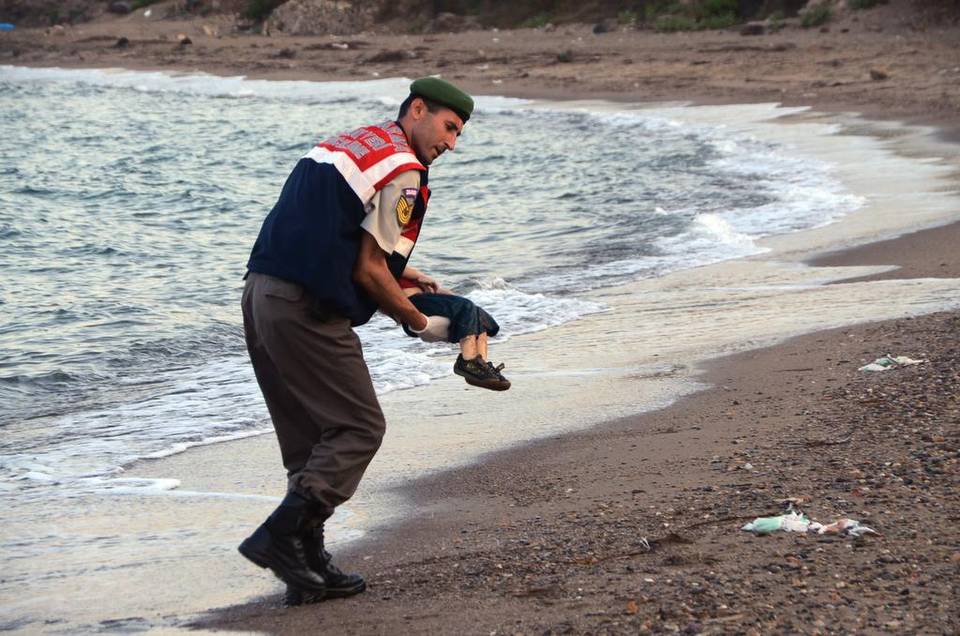
Newspapers around the world deliberated the appropriateness of publishing such a graphic photograph. The image, now famous, showed a lifeless toddler wearing black Velcro sneakers, a boy likely not old enough to have learned to tie his own shoes, being carried away from the beach where his body had washed ashore. At issue was how to balance the desire to show the extent of the refugee crisis with an awareness of how disquieting an image it was.
One editor at The New York Times explained that after some consideration, the newspaper “chose to run a powerful version of this photo because it (brought) home the enormity of this tragedy.” Although critics labeled the choice as insensitive and even voyeuristic, the paper and those publications that followed suit made the suffering of others in faraway places seem proximate and urgent. It is decisions such as these that have the potential to encourage others to offer assistance.
The 2004 film Hotel Rwanda brought considerable interest in re-examining the 1994 genocide and the somber reality that the other nations of the world hummed along, absorbed in their own affairs, while an estimated twenty percent of Rwandans were murdered. Among the film’s most striking scenes is a conversation between Paul Rusesabagina, the hotel’s manager, and a cameraman sent from the United States to document the genocide.
When Paul learns that the cameraman has recorded footage of the violence, he is relieved, believing international aid would be sent as soon as the footage were broadcast. But the cameraman responds with what seems to be the unfortunate truth: “If people see this footage, they’ll say, ‘Oh my God, that’s horrible’ and then go on eating their dinners.”
The rest is for members.
All proceeds go toward publishing more writers and poets.
Free for 30 days, then $3 a month
Become a member
This work is preserved in Merion West’s archive of articles and poems published from 2016 through early 2025. Explore the archive